
 1 hour ago
2
1 hour ago
2
Sam Altman thinks the best way to share the benefits of artificial intelligence is to give the public a literal financial stake in the company building it. Not through tokens, not through universal basic income, but through good old-fashioned equity.
The OpenAI CEO has been pushing what the company calls a “Public Wealth Fund,” a proposal outlined in OpenAI’s April 2026 policy document titled “Industrial Policy for the Intelligence Age.” The concept is straightforward in theory and wildly ambitious in practice: give every US citizen a slice of AI-driven economic growth through diversified investments in AI companies and the businesses adopting their tools, then distribute the returns directly to the public.
OpenAI confidentially filed for a US IPO in June 2026, with projections targeting a valuation of up to $1 trillion. Altman has reportedly been in discussions with the Trump administration about the US government taking an equity position in OpenAI. The idea is that government-held shares could help seed the Public Wealth Fund, creating a mechanism through which AI wealth flows to taxpayers rather than concentrating among a handful of Silicon Valley insiders and institutional investors.
The OpenAI Foundation currently holds a 26% equity stake in the organization, valued at approximately $130 billion. That foundation stake exists as a direct result of OpenAI’s 2025 restructuring, when its for-profit arm transitioned to a public benefit corporation structure. That shift was critical because it enabled conventional equity ownership for the first time, replacing the complicated capped-profit model that had governed the company since its awkward pivot from nonprofit origins.
For a company whose CEO once co-founded Worldcoin, a crypto project built around iris-scanning orbs and digital tokens, the complete absence of any cryptocurrency or digital asset component in this initiative is notable. There are no tokens associated with the Public Wealth Fund. No blockchain-based distribution mechanism. Instead, OpenAI is leaning entirely into traditional equity structures, plugging into existing financial infrastructure without requiring anyone to set up a wallet or understand gas fees.
Altman’s conversations with the White House add a layer of political complexity. A government equity stake in a private AI company would be unprecedented in modern US economic policy. The closest analogues, like the Treasury’s stakes in automakers and banks during the 2008 financial crisis, were emergency interventions, not proactive wealth-building strategies. A government with equity in a dominant AI firm raises obvious questions about regulatory capture, competitive neutrality, and the uncomfortable optics of a sitting administration holding shares in a company it’s also responsible for overseeing.
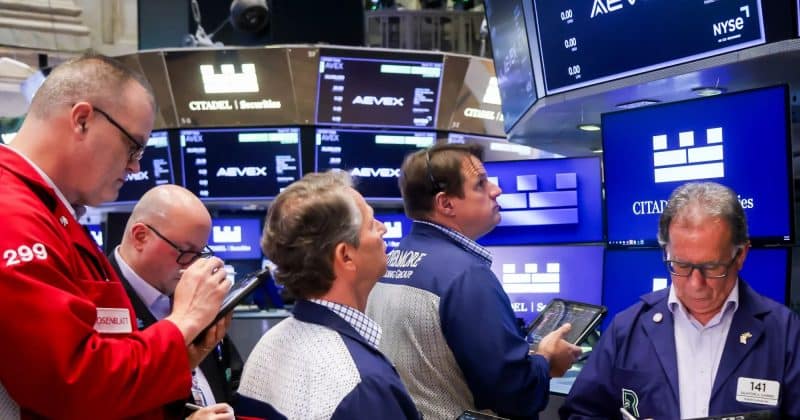
If OpenAI successfully goes public at anything close to a $1 trillion valuation, it instantly becomes a bellwether for the entire AI sector. For retail investors, the IPO itself represents the first opportunity to directly own shares in the company behind ChatGPT. If the government does acquire a stake and uses it to seed a citizen-facing investment vehicle, it could channel new participants into equity markets who might otherwise never have engaged with public market investing.
Public benefit corporations have a legal obligation to balance shareholder returns with broader societal impact. That’s a feature for the Public Wealth Fund narrative, but it could become a friction point for institutional investors accustomed to pure profit maximization as the north star.
Disclosure: This article was edited by Editorial Team. For more information on how we create and review content, see our Editorial Policy.












 English (US) ·