
 1 month ago
33
1 month ago
33
JPMorgan AI spending has been reclassified from discretionary innovation to core infrastructure, placing it alongside data centers and cybersecurity in the bank’s budget.
Summary
- JPMorgan reclassified its $2bn annual AI budget from discretionary innovation to core infrastructure, placing it alongside payment systems and cybersecurity in its $19.8bn tech spend.
- CEO Jamie Dimon says JPMorgan AI deployment has already generated $2bn in operational savings, effectively self-funding the investment across 150,000 employees.
- The bank runs over 500 active AI use cases in production, including fraud detection that has cut anti-money laundering false positives by 95%.
JPMorgan has reclassified JPMorgan AI investment as core infrastructure, treating its $2bn annual budget as non-negotiable as cybersecurity. The world’s largest bank has moved its AI spending out of the discretionary innovation category and placed it alongside data centers, payment systems, and core risk controls inside its $19.8bn total technology budget for 2026.
CEO Jamie Dimon said the investment has already self-funded through $2bn in operational savings across more than 150,000 employees, adding a 10% to 11% productivity gain in engineering, operations, and fraud detection.
The reclassification is not symbolic. When a bank of JPMorgan’s scale treats AI as a non-discretionary cost on par with fraud detection infrastructure, the signal moves downstream to every other financial institution in its competitive set.
CFO Jeremy Barnum confirmed that modernization spending has peaked and the bank’s investment is now shifting toward products, platforms, and AI integration as a baseline operating cost rather than a special project.
What JPMorgan’s AI stack looks like
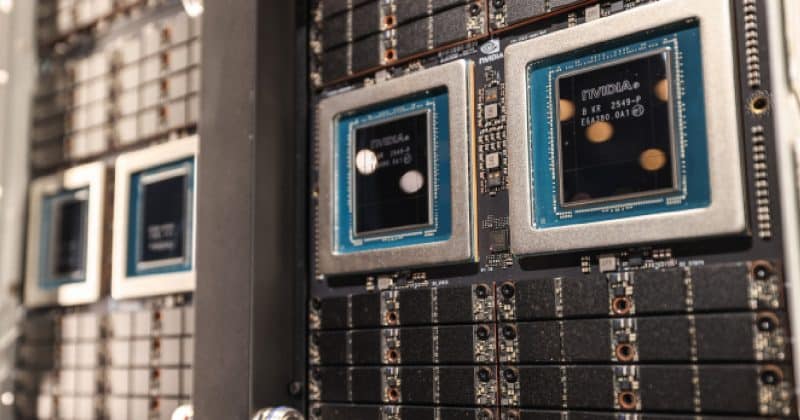
The bank’s proprietary LLM Suite, named Innovation of the Year at American Banker’s 2025 awards, is now used daily by more than 230,000 employees. It serves as an AI hub that integrates internal customer data, processing workflows, and external information sources through specialized agents.
Over 500 active AI use cases are in production, spanning fraud detection, investment banking deck generation, compliance review, and predictive liquidity management for corporate treasurers.
Fraud detection has seen some of the most measurable results. Anti-money laundering false positives have been cut by 95% using machine learning systems that monitor transactions in near real-time. The bank runs the AI on infrastructure backed by Microsoft Azure and Snowflake, giving it elastic scalability while maintaining the data governance that banking regulators demand.
Crypto and market relevance
JPMorgan is simultaneously pushing into digital assets. As crypto.news reported, the convergence of AI infrastructure investment and digital asset rails is creating a new competitive dynamic in financial services.
The bank has also launched its JPMD deposit token on public blockchain infrastructure, with its proprietary AI now managing JPMD flows and predicting when institutional clients will need liquidity before human traders identify the need.
Dimon has predicted JPMorgan will be a winner amid rising stablecoin threats and economic uncertainty, framing the AI and blockchain combination as the bank’s primary competitive moat.
As crypto.news tracked, OpenAI is rolling out competing financial-services tools targeting the same institutional clients JPMorgan is automating, setting up a direct infrastructure contest between AI-native companies and AI-upgraded incumbents for control of the next layer of financial operations.














 English (US) ·