
 3 hours ago
2
3 hours ago
2
David Sacks leaves office with wins for crypto infrastructure, while Bitcoin holders are still waiting
David Sacks is out of the formal White House crypto czar role after exhausting the 130-day limit attached to his special government employee status.
The change closes the clearest window for a scorecard. The record is substantial, yet it falls well short of the campaign mood that surrounded Sacks’ appointment and the early industry enthusiasm that followed.
Sacks leaves behind a policy footprint that favored institutional crypto plumbing, bank access, dollar stablecoins, custody, and tokenized financial infrastructure.
The Bitcoin community is now questioning whether Sacks delivered on expectations, with some influential traders declaring,
“Nothing that we elected him for was accomplished.”
Bitcoin holders received a Strategic Bitcoin Reserve through Trump’s March 6, 2025 executive order, yet the reserve arrived as a ring-fencing exercise around seized coins rather than a federal accumulation program.
The distinction sits at the center of the current frustration. The administration delivered movement around crypto. The direct economic gain for Bitcoin holders remained limited.
The most durable critique is straightforward. Sacks helped produce a regime that lowered friction for banks, custodians, issuers, and politically connected capital, while leaving Bitcoin investors with mostly symbolic progress and a widening gap between campaign rhetoric and policy economics.
CryptoSlate’s own coverage traces that arc clearly. Early reporting on Sacks’ appointment captured the industry’s optimism around legal clarity and a friendlier White House.
By March 2025, Sacks was already damping market assumptions after Trump mentioned altcoins for a government stockpile, telling Bloomberg the market was “reading too much” into the move.
More recently, CryptoSlate documented how the policy premium embedded into Trump’s crypto rally evaporated as the market repriced the administration’s actual deliverables.
The sequence leads to a clear conclusion. Washington improved the operating environment for crypto intermediaries. Washington did far less to create a fresh federal demand engine for Bitcoin.
What Sacks actually achieved
In March 2025, the Office of the Comptroller of the Currency confirmed that national banks and federal savings associations could engage in crypto custody, certain stablecoin activities, and distributed ledger participation without first obtaining supervisory non-objection.
Later that month, the FDIC rescinded its earlier approval requirement and stated that FDIC-supervised institutions could engage in permissible crypto-related activities without prior signoff. The SEC’s SAB 122 also rescinded the guidance in SAB 121, reducing one of the accounting burdens that had made institutional custody less attractive.
Those changes were real. They loosened key chokepoints. They improved the economics for regulated incumbents. They also shifted the center of gravity toward institutions that already controlled distribution, compliance, balance sheet capacity, and customer onboarding.
Crypto-native firms gained a less hostile environment, while the immediate beneficiaries sat closer to the banking perimeter than to the Bitcoin holder, who had expected a more direct policy dividend.
The second item is stablecoin legislation. CryptoSlate’s coverage of the GENIUS Act and its analysis of the stablecoin boom that followed makes it clear where Washington found urgency. The bill gave dollar-backed issuers a clearer operating path and reinforced the Treasury-market role that large stablecoin issuers are expected to play.
That is a strategic win for dollar distribution. It is also a strategic win for the firms positioned to warehouse reserves, manage compliance, and package digital dollars into mainstream finance.
The third item is market-structure progress. The CLARITY Act and the broader fight over stablecoin reward definitions show where the administration and Congress invested negotiating capital.
The conflict centered on who gets to control distribution economics around tokenized dollars, how close those products can come to bank deposits, and how much room exchanges and wallets retain to offer reward layers around stablecoins. The subject is meaningful. It also sits one level removed from Bitcoin’s core policy asks.
Viewed together, those wins form a coherent block.
Sacks helped move crypto from a defensive posture under Gary Gensler-era enforcement into a more investable policy architecture for institutions.
Banks, custodians, issuers, exchanges, and tokenization platforms can do more today than they could before Trump returned. The achievement is clear.
The beneficiary base is also clear, and it differs from the constituency that expected a Bitcoin-first White House.
Where the Bitcoin side falls short
The administration can point to the Strategic Bitcoin Reserve as a historic move, and on a formal level, that claim is justified.
The United States designated Bitcoin as a strategic reserve asset and separated it from the broader digital asset stockpile. Sacks stressed that the reserve would focus on long-term stewardship of seized Bitcoin, while altcoins in the stockpile could be sold, rebalanced, or staked at Treasury discretion.
The reserve never moved into the zone that most Bitcoin holders cared about. The administration did not launch an immediate federal buying program.
It did not announce a schedule for open-market accumulation. It did not create a standing mechanism that would pull supply from the market in size.
The administration’s digital asset roadmap highlighted the same limitation. The reserve existed, while the acquisition path remained opaque.
The distinction is where disappointment hardens. A reserve built from forfeited Bitcoin changes custody and future sale behavior. It leaves the market’s demand profile largely untouched compared with the campaign language many Bitcoin holders had priced in. Preservation and accumulation produce very different outcomes for price formation.
That difference explains why some of the anger on crypto feeds is directionally understandable. Bitcoin holders were promised something more forceful than what arrived.
Stablecoins, tokenized finance, and institutional rails moved faster through Washington than Bitcoin-specific demand policy.
The administration’s most visible crypto progress also aligned neatly with constituencies that monetize issuance, distribution, custody, and compliance.
The administration delivered enough for institutions to monetize the next phase of digital finance. Bitcoin holders still lack a federal policy catalyst with direct market impact.
Why the market has re-priced the promise
Markets eventually force rhetoric to clear. CryptoSlate’s coverage of the collapse in the post-election policy premium captures that shift.
Investors who once priced a pro-crypto White House as a broad tailwind later discovered that not every crypto win maps onto Bitcoin in the same way. Stablecoin legislation can favor dollar liquidity and tokenized settlement.
Bank guidance can favor custody and compliance capacity. Those developments help the ecosystem. They do far less to create a new marginal buyer for BTC.
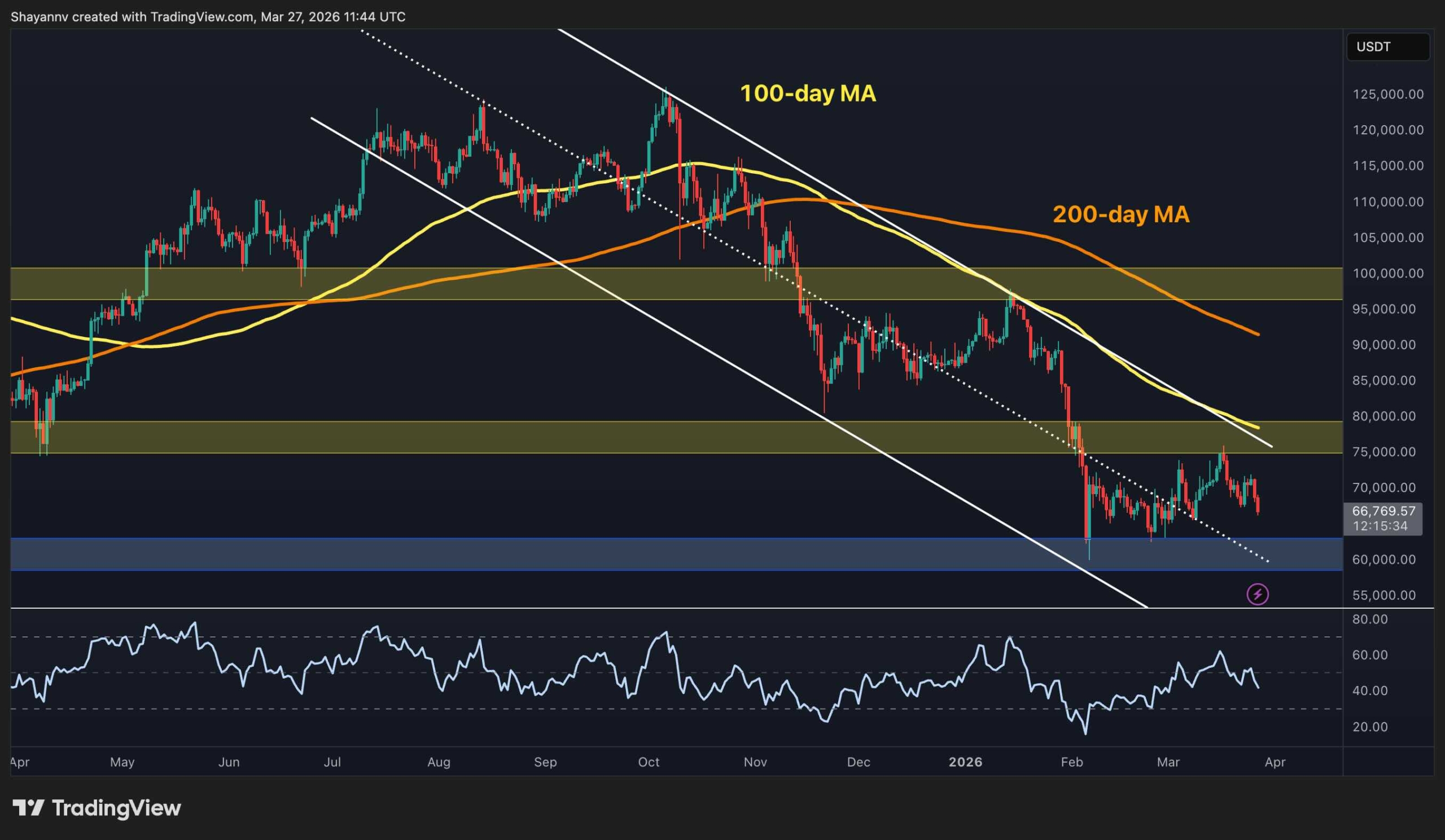
The market backdrop today underlines the point. Bitcoin trades around $66,569, down about 3.9% on the day. Spot ETF flows have also shown a more selective institutional appetite than the campaign-era narrative implied.
March data from Farside Investors shows sharp swings between inflow and outflow sessions, a pattern that fits tactical allocation and de-risking behavior more than a simple policy-driven repricing higher.
Bitcoin remains in a familiar place. Price is still governed by liquidity conditions, rates, ETF demand, and macro positioning. Washington can improve the operating environment.
Washington has not yet rewritten Bitcoin’s demand curve.
The week ahead, Bitcoin stays in focus
The coming week is more likely to shape Bitcoin through macro channels than through additional post-Sacks messaging.
Friday, April 3 brings the March employment report. Earlier in the week, the market will also parse fresh labor and activity signals, including the usual month-turn growth and employment data that feed directly into rate expectations, Treasury yields, and broader risk appetite.
That sequence feeds into crypto through a straightforward transmission path. Softer labor data can ease yield pressure and help duration-sensitive risk assets.
Firmer labor data can push yields higher, tighten financial conditions, and pressure the assets that benefited from liquidity optimism. Bitcoin continues to trade inside that macro framework even while crypto policy remains a live political theme.
The gap between symbolic and economic progress is therefore becoming harder to ignore.
A reserve announcement built on seized coins can support sentiment. A banking reset can improve access. Stablecoin law can strengthen dollar-based crypto rails.
None of those developments guarantee stronger Bitcoin demand into a macro-heavy week.
The market still needs sustained ETF absorption, improving liquidity conditions, or an actual federal accumulation mechanism that removes supply from circulation in size.
Sacks leaves office having helped build the legal and regulatory lanes for the next phase of crypto finance in the United States. Banks got clearer permission. Custodians got relief. Stablecoin issuers got a path. Tokenized capital markets moved closer to the center of the American financial stack.
Bitcoin holders got recognition, a reserve label, and fewer fears around forced government selling.
They did not get the forceful federal accumulation program that campaign rhetoric had implied.
Sacks leaves a policy architecture that works best for institutional crypto, dollar tokenization, and the firms positioned to collect fees at the system’s chokepoints.
Bitcoin remains the political symbol. Stablecoins and tokenized finance have been the operational priority.
Until that hierarchy changes, frustration among Bitcoin holders is likely to keep rising, especially in weeks when macro data, ETF flows, and yield pressure continue to drive price more than Washington does.

















 English (US) ·