
 1 hour ago
2
1 hour ago
2
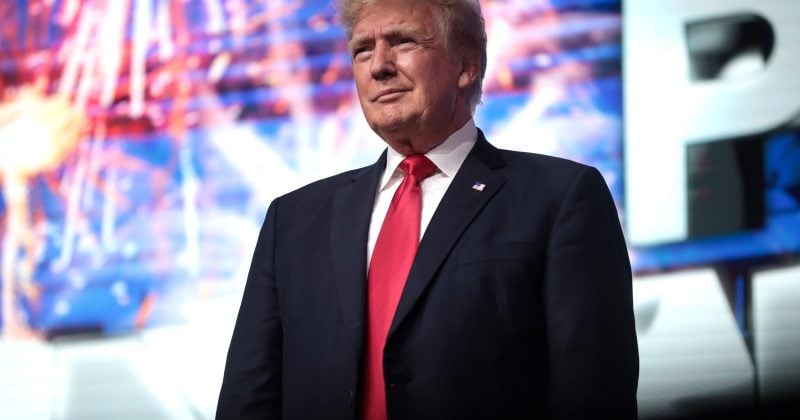
The Russia sanctions bill working its way through Washington just got a lot more crowded. President Donald Trump has signaled support for expanding the Sanctioning Russia Act of 2025 to include Iran and Hezbollah, broadening what was already a sweeping piece of legislation into something with tentacles across multiple geopolitical conflicts.
What the bill actually does
The Sanctioning Russia Act of 2025, introduced by Sen. Lindsey Graham on April 1, 2025, is the legislative scaffolding here. The bill permits the imposition of tariffs reaching up to 500% on countries that continue purchasing Russian energy if peace negotiations over Ukraine fail to materialize.
Trump first telegraphed the Iran expansion in November 2025, when he noted that Republicans were preparing legislation to formally bring Iran into the sanctions framework. The logic was straightforward: Iran has been actively supporting Russia’s war effort in Ukraine, so treating them as linked actors in the same sanctions architecture made strategic sense to the administration.
By July 10, 2026, bipartisan senators including Graham and Sen. Richard Blumenthal confirmed that the Trump White House had approved the latest draft of the revised bill, which now encompasses both Iran and Hezbollah.
Hezbollah’s inclusion tracks with a longer legislative history. Congressional sanctions discussions have linked Hezbollah to Iranian financing networks since at least 2017, when the Countering America’s Adversaries Through Sanctions Act, better known as CAATSA, passed with overwhelming support.
Why crypto is a direct target here
The State Department did not wait for the bill to pass before acting. In June 2026, it specifically targeted Iranian digital asset exchanges as part of a coordinated effort to disrupt terror financing and sanctions evasion networks tied to both Iran and Hezbollah.
What investors should actually watch
When CAATSA passed in 2017, it reshaped how institutional investors thought about exposure to Russian and Iranian financial networks. A similarly broad expansion now, in a market where institutional crypto participation is significantly larger than it was eight years ago, could prompt a similar reassessment of risk premiums across digital asset portfolios.
The bill’s 500% tariff mechanism also introduces an indirect pressure point. Countries in Asia and the Middle East that continue buying Russian energy could find themselves facing punishing trade barriers, which would create knock-on economic stress in regions where crypto adoption has grown significantly as a hedge against local currency instability.
Disclosure: This article was edited by Editorial Team. For more information on how we create and review content, see our Editorial Policy.











 English (US) ·