
 1 hour ago
2
1 hour ago
2
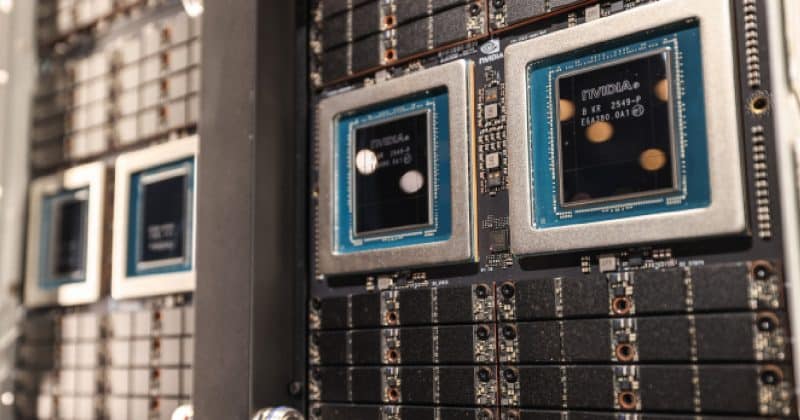
Three companies, none of which existed a decade ago, now account for about 21% of all AI compute on the planet. OpenAI, Anthropic, and xAI collectively operated less than 4 million H100-equivalent GPUs by the end of 2025, yet that relatively modest hardware footprint translated into a disproportionate share of the world’s AI processing capacity.
To put that in perspective, the total global fleet stood at roughly 16 to 20 million H100-equivalent chips deployed or sold by late 2025.
Who actually owns the chips
OpenAI led the trio with approximately 1.7 million H100-equivalent GPUs by year-end 2025. The company assembled that arsenal primarily through partnerships with Microsoft, Oracle, and CoreWeave clouds, not by buying hardware outright.
Frontier labs increasingly rent cloud capacity rather than owning their own silicon. The compute is available, but the leverage sits with whoever holds the lease.
Google alone held around 5 million H100-equivalent GPUs, roughly 25% of the total global AI compute capacity. That means Google, by itself, controls more AI processing power than OpenAI, Anthropic, and xAI combined.
The compute arms race in numbers
Epoch AI, a research organization that tracks AI infrastructure trends, estimated the three labs controlled between 20% and 30% of global capacity by the end of 2025. The 21% figure falls squarely within that range.
Chinese entities, meanwhile, held a mere 5% of global AI compute capacity.
One number that jumps off the page: Anthropic agreed in May 2026 to pay xAI $1.25 billion per month for access to xAI’s Colossus cluster computing resources. That deal could exceed $40 billion over its full contract period.
What this means for investors
xAI built Colossus, its massive GPU cluster, partly to train its own Grok models. Now it is monetizing that infrastructure by renting it to a direct competitor.
Google’s 25% share of global AI compute gives it structural advantages that go beyond its own AI products.
The frontier labs’ reliance on rented capacity also introduces a meaningful risk factor. OpenAI’s 1.7 million GPUs are impressive until you remember most of them sit in someone else’s data center. Contract terms, pricing changes, or shifts in cloud provider strategy could materially affect these labs’ ability to train and deploy models at current scale.
If three well-funded labs already consume a fifth of global compute, and hyperscalers control most of the rest, the available pool for everyone else is shrinking. The barrier to entry for frontier AI research is no longer just talent or data. It is access to chips that are already spoken for.
Disclosure: This article was edited by Editorial Team. For more information on how we create and review content, see our Editorial Policy.














 English (US) ·