
 2 hours ago
2
2 hours ago
2
Apple wants to buy cheap memory chips from a Chinese company the Pentagon considers a military-linked entity. The Cupertino giant is reportedly lobbying the Trump administration for permission to procure DRAM from ChangXin Memory Technologies, a manufacturer that sits on the US government’s blacklist.
Rising memory costs have already hit Apple’s product lineup. Select MacBook and iPad models have seen price increases of around 20%, driven by supply constraints that AI-related demand has only made worse. CXMT is that alternative. The Chinese manufacturer reportedly offers contracts that come in up to 30% cheaper than competing suppliers.
CXMT itself is having a moment. The company’s projected revenue for fiscal year 2025 sits at approximately $8.6 billion, a 156% jump year-over-year. It recently posted its first positive net income at $1 billion, with gross margins at 37.8%. Production capacity has expanded to 300,000 wafers per month.
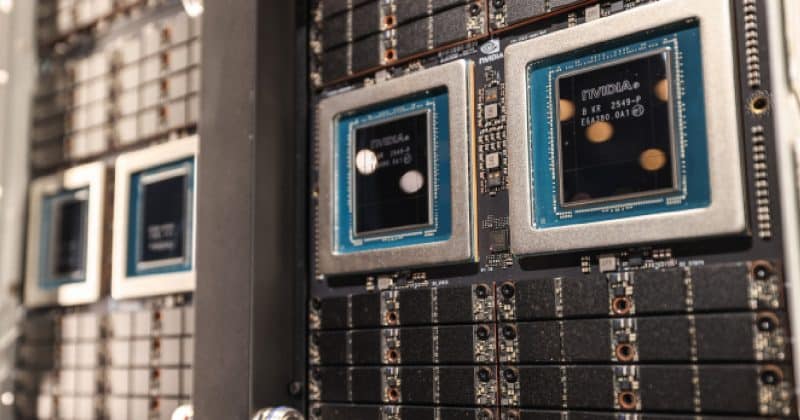
But CXMT manufactures commodity-grade DRAM, products like DDR5 and LPDDR5X. These are the memory chips that go into phones, laptops, and tablets. They’re not the bleeding-edge components driving AI infrastructure buildouts.
The HBM market is controlled by three companies: Micron, Samsung, and SK Hynix. CXMT doesn’t compete here. Its technology is estimated to be one to three generations behind its global competitors, which means it’s nowhere close to producing the kind of memory that data center operators are desperately trying to secure.
Micron’s revenue exposure to China has already dropped significantly, falling from around 14% in 2023 to an estimated 7% by 2025. CXMT’s growing domestic market share is a major reason for that decline. If CXMT secures a waiver to sell to Apple, it would mark a notable expansion beyond China’s borders, putting incremental pressure on commodity DRAM pricing globally.
For Micron specifically, the investment thesis increasingly rests on its AI memory portfolio. The company has positioned itself as one of only three suppliers capable of delivering the HBM chips that hyperscalers need, and demand in that segment continues to outstrip supply.
CXMT sits on the Pentagon’s military list, which means any waiver Apple secures would be politically charged and potentially reversible. Building a supply chain dependency on a blacklisted entity carries risks that go well beyond chip pricing.
Disclosure: This article was edited by Editorial Team. For more information on how we create and review content, see our Editorial Policy.












 English (US) ·