
 1 month ago
27
1 month ago
27
Key takeaways
- Bitcoin is increasingly seen as digital capital with significant yield potential.
- Digital credit can stabilize Bitcoin investments by reducing volatility and risk.
- Converting Bitcoin capital gains into yield through digital credit is a strategic financial approach.
- The integration of digital credit with Bitcoin and DeFi revitalizes the crypto ecosystem.
- Digital credit is essential for generating yield within the DeFi landscape.
- Innovative projects in DeFi are creating yield opportunities backed by real-world assets.
- Merging traditional financial concepts with digital assets leads to innovative financial products.
- The Sharpe ratio is crucial for assessing risk-adjusted returns, with higher ratios indicating better investments.
- Digital credit boasts a Sharpe ratio significantly higher than traditional credit instruments and equities.
- Stretch, a financial instrument, improves portfolio performance compared to Bitcoin.
- Digital credit’s high Sharpe ratio suggests its superior performance over traditional investments.
- The evolution of DeFi is marked by the intersection of traditional finance and digital innovation.
- Bitcoin’s role as digital capital is reshaping financial strategies and investment portfolios.
- The creation of digital credit is a fundamental step in leveraging Bitcoin for yield generation.
- The Sharpe ratio comparison underscores the potential advantages of digital credit in investment portfolios.
Guest intro
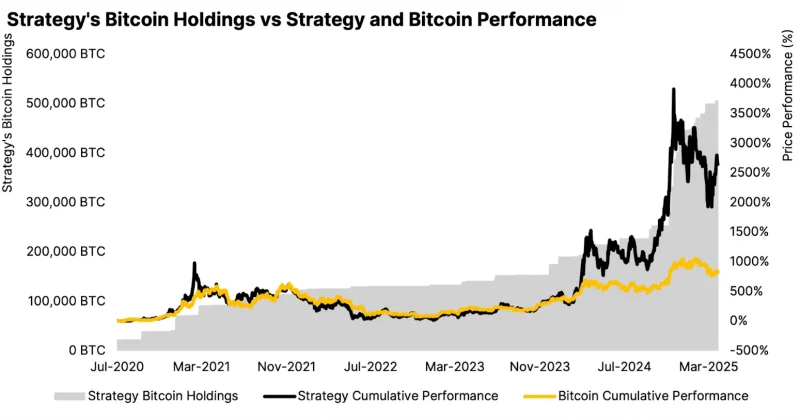
Michael Saylor is the Founder and Executive Chairman of Strategy (MSTR), a publicly traded business intelligence firm that holds 818,334 Bitcoin. He founded MicroStrategy in 1989 and pioneered its strategy of acquiring over 818,000 Bitcoin worth $65 billion as a treasury asset. Saylor is a leading Bitcoin advocate who authored The Mobile Wave and holds dual MIT degrees in Aerospace Engineering and History of Science.
Why Bitcoin is considered digital capital
- Bitcoin is viewed as digital capital with the potential for significant yield.
-
We think bitcoin is digital capital and we think the killer app of digital capital is digital credit.
— Michael Saylor
- Digital credit can enhance Bitcoin’s stability by reducing volatility.
-
We have stripped most of the volatility and up most of the risk off it.
— Michael Saylor
- The concept of digital capital aligns with traditional finance principles.
- Saylor’s perspective highlights Bitcoin’s evolving role in finance.
- Understanding digital capital is key to grasping Bitcoin’s financial ecosystem.
- The idea of Bitcoin as digital capital is gaining traction among investors.
- Bitcoin’s yield potential is a focal point for financial strategies.
- Digital capital is reshaping how investors approach Bitcoin.
- The financial ecosystem is adapting to Bitcoin’s role as digital capital.
- Bitcoin’s integration into finance highlights its transformative impact.
The role of digital credit in reducing Bitcoin volatility
- Digital credit can significantly reduce Bitcoin’s volatility and risk.
-
We have stripped most of the volatility and up most of the risk off it.
— Michael Saylor
- The mechanism of digital credit enhances Bitcoin’s stability.
- Digital credit offers an 11% yield with reduced volatility.
-
We extracted about 11% yield with about three vol.
— Michael Saylor
- Understanding digital credit is crucial for Bitcoin investors.
- Digital credit’s impact on Bitcoin is a strategic advantage.
- Investors are leveraging digital credit to stabilize Bitcoin investments.
- The reduction of volatility makes Bitcoin more appealing to investors.
- Digital credit is a tool for managing Bitcoin’s investment risk.
- Saylor emphasizes the importance of digital credit in Bitcoin strategies.
- The integration of digital credit is a key development for Bitcoin.
How digital credit converts Bitcoin gains into yield
- Digital credit allows for converting Bitcoin capital gains into yield.
-
The idea behind stretch or digital credit is you’re converting a capital gain into a dividend.
— Michael Saylor
- This conversion mechanism is a strategic financial approach.
- Digital credit creates yield from Bitcoin investments.
-
If I expect 30% returns on bitcoin capital I can just strip the first 11% and pay it as a credit dividend.
— Michael Saylor
- Understanding this conversion is crucial for Bitcoin investors.
- The financial strategy involves leveraging Bitcoin for yield generation.
- Digital credit is reshaping how Bitcoin gains are utilized.
- Investors are adopting digital credit for strategic financial benefits.
- The conversion of gains into yield is a key advantage of digital credit.
- Saylor’s insights highlight the potential of digital credit strategies.
- Digital credit is a transformative tool for Bitcoin investors.
The integration of digital credit with DeFi and Bitcoin
- Digital credit integration invigorates the crypto ecosystem.
-
Now the capital flows in it flows to yield coins it flows to digital credit it flows to bitcoin.
— Michael Saylor
- This integration is revitalizing the DeFi space.
- The relationship between digital credit and DeFi is evolving.
- Digital credit is a catalyst for innovation in the crypto industry.
- The integration highlights a shift in capital utilization.
- Understanding this integration is key for DeFi investors.
- Digital credit’s role in DeFi is expanding rapidly.
- The synergy between digital credit and DeFi is transformative.
- Investors are capitalizing on digital credit’s integration with DeFi.
- The crypto ecosystem is adapting to digital credit’s influence.
- Saylor emphasizes the importance of digital credit in DeFi strategies.
The creation of digital credit for DeFi yield generation
- Digital credit is essential for generating yield in DeFi.
-
The first step is create digital credit and we were uniquely able to do it.
— Michael Saylor
- This creation is a fundamental mechanism in DeFi.
- Digital credit leverages Bitcoin for yield generation.
-
We took our bitcoin and everybody said well what are you gonna do with the bitcoin.
— Michael Saylor
- Understanding digital credit’s role in DeFi is crucial for investors.
- The creation of digital credit is a strategic financial move.
- Investors are leveraging digital credit for DeFi yield opportunities.
- Digital credit is reshaping yield generation in the DeFi space.
- Saylor’s strategy highlights the potential of digital credit in DeFi.
- The DeFi ecosystem is evolving with digital credit’s influence.
- Digital credit is a key component of DeFi yield strategies.
Innovative projects creating yield opportunities in DeFi
- DeFi is rapidly evolving with innovative yield opportunities.
-
A bunch of digital assets innovators like apex and saturn and pendle… built tokens that were backed by stretch.
— Michael Saylor
- These projects are backed by real-world assets.
- The intersection of traditional finance and DeFi is creating new opportunities.
- Understanding these innovations is crucial for DeFi investors.
- The potential for yield generation in DeFi is expanding.
- Investors are capitalizing on innovative DeFi projects.
- The DeFi landscape is marked by rapid innovation.
- Yield opportunities in DeFi are backed by strategic financial products.
- Saylor highlights the potential of DeFi innovations for yield generation.
- The DeFi space is adapting to new financial innovations.
- Innovative projects are reshaping the DeFi yield landscape.
Merging traditional financial concepts with digital assets
- Traditional finance concepts are merging with digital assets.
-
We took return of capital tax accounting… we took preferred stocks… we took publicly listed stocks.
— Michael Saylor
- This merger creates innovative financial products.
- Digital assets are reshaping traditional financial strategies.
- Understanding this merger is crucial for investors.
- The potential for innovation in finance is expanding.
- Investors are leveraging digital assets for strategic advantages.
- The financial landscape is adapting to digital asset integration.
- Saylor emphasizes the potential of merging finance with digital assets.
- The innovation potential in finance is marked by digital asset integration.
- Traditional finance is evolving with digital asset influence.
- Digital assets are a catalyst for financial innovation.
Understanding the significance of the Sharpe ratio
- The Sharpe ratio measures risk-adjusted returns.
-
The Sharpe ratio is the risk adjusted return.
— Michael Saylor
- A higher Sharpe ratio indicates a more favorable investment.
- Understanding the Sharpe ratio is crucial for investors.
- Digital credit has a high Sharpe ratio compared to traditional instruments.
-
A two and a half Sharpe ratio is higher by a factor of five than every credit instrument.
— Michael Saylor
- The Sharpe ratio is a key metric for investment analysis.
- Investors are leveraging the Sharpe ratio for strategic decisions.
- Saylor highlights the importance of the Sharpe ratio in finance.
- The Sharpe ratio comparison underscores digital credit’s potential.
- Digital credit’s high Sharpe ratio suggests superior performance.
- The Sharpe ratio is a critical tool for evaluating investments.
Digital credit’s superior Sharpe ratio compared to traditional investments
- Digital credit boasts a high Sharpe ratio compared to traditional investments.
-
Digital credit is two and a half.
— Michael Saylor
- This ratio is significantly higher than traditional credit instruments.
- Understanding this comparison is crucial for investors.
- The high Sharpe ratio indicates digital credit’s potential value.
- Investors are capitalizing on digital credit’s superior performance.
- The Sharpe ratio highlights digital credit’s investment advantages.
- Digital credit is outperforming traditional investment options.
- Saylor emphasizes digital credit’s superior Sharpe ratio.
- The investment landscape is adapting to digital credit’s influence.
- Digital credit’s performance is marked by a high Sharpe ratio.
- The Sharpe ratio comparison underscores digital credit’s value.
Disclosure: This article was edited by Editorial Team. For more information on how we create and review content, see our Editorial Policy.














 English (US) ·