
 50 minutes ago
2
50 minutes ago
2
Jul. 15, 2026 at 6:55 pm GMT 2 min read
- Morgan Stanley won preliminary OCC approval for a digital-asset trust bank that could bring custody and staking in-house.
- The bank could consolidate custody, transfers, fiduciary staking and lending-collateral work, pressuring outside crypto service providers.
- Final approval is still pending, and execution venues, liquidity, counterparties and blockchain infrastructure would remain external questions.
In June, Morgan Stanley received preliminary conditional approval from the Office of the Comptroller of the Currency to establish a national trust bank for digital assets.
The OCC decision opened a path for Morgan Stanley Digital Trust to bring custody, transaction administration, fiduciary staking, and collateral support inside the firm.
The proposed subsidiary would serve Morgan Stanley Wealth Management clients. Its public application presents it as a wholly owned national trust bank, giving the firm a regulated vehicle for functions that separate specialist providers have often handled.
The OCC's application record classifies the filing as a new bank charter under a holding company with trust powers requested.
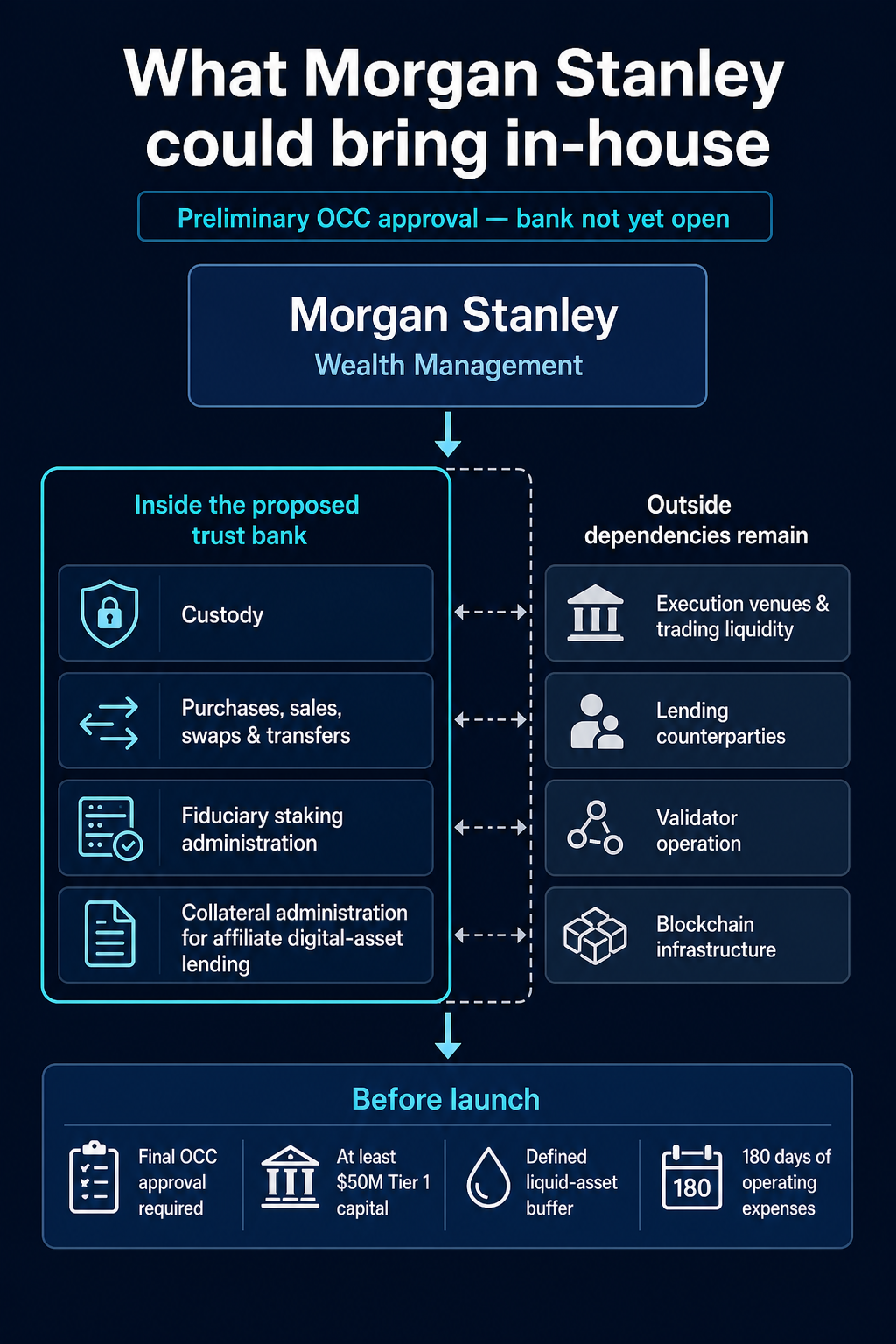
The proposed services cover everything from safeguarding assets to running the day-to-day operations behind an institutional account. It covers custody, purchases, sales, swaps and transfers, fiduciary staking, and collateral administration supporting affiliate digital-asset lending.
With final approval and implementation, Morgan Stanley could retain customer assets, transaction administration, staking administration, and lending-collateral work within its group.
That shift puts crypto-native intermediaries under fresh pressure. Third-party custodians, staking administrators, and collateral-service providers face the clearest exposure where their products overlap with the trust bank's approved functions.
Bringing those controls in-house at Morgan Stanley could make outside firms less central to client relationships and daily operational workflows around digital assets. It could also reduce the number of handoffs among the teams safeguarding assets, administering staking and managing collateral, concentrating more of the service relationship in one Wall Street group.
Several layers would still sit beyond the defined trust-bank plan. Access to execution venues, trading liquidity, lending counterparties, validator operation, and broader blockchain infrastructure each involve their own relationships and implementation choices. The OCC filing shows what Morgan Stanley wants to keep inside the bank, while outside firms can continue handling the rest.
The approval still comes with hurdles. Morgan Stanley Digital Trust needs at least $50 million in Tier 1 capital, a set pool of liquid assets, and enough liquidity to cover 180 days of operating costs, according to Corporate Decision 1378. The OCC application record lists the charter action as approved on June 18.
Final approval would let Morgan Stanley pull custody, transfers, fiduciary staking and collateral support for affiliate lending under one roof. Crypto-native providers would then have to show where they still add value once a Wall Street bank keeps the most important control points for itself.














 English (US) ·