
 1 hour ago
1
1 hour ago
1
Bitcoin (BTC) has dropped nearly 7% from its local peak of $82,800, as several groups of wallet holders switched from accumulation to distribution. Data suggests that this distribution, combined with increasing realized losses, points to a potential shift in momentum.
Key takeaways:
- Whale absorption of newly mined BTC supply drops to all-time lows below -150%.
- Bitcoin holders shift from accumulation to distribution after BTC price drop
- Bitcoin realized losses surged above $600 million in a single day as BTC price fell to $76,000.
Bitcoin whales absorbing at all-time lows
The yearly absorption rate measures the amount of new BTC issued that has been absorbed by the market over the past year. Currently, the absorption rate by exchanges is improving while whales are losing coins at a historic pace.
Notably, Bitcoin’s yearly absorption rate by exchanges has improved to -75 % from below -100% in April as inflows continue.
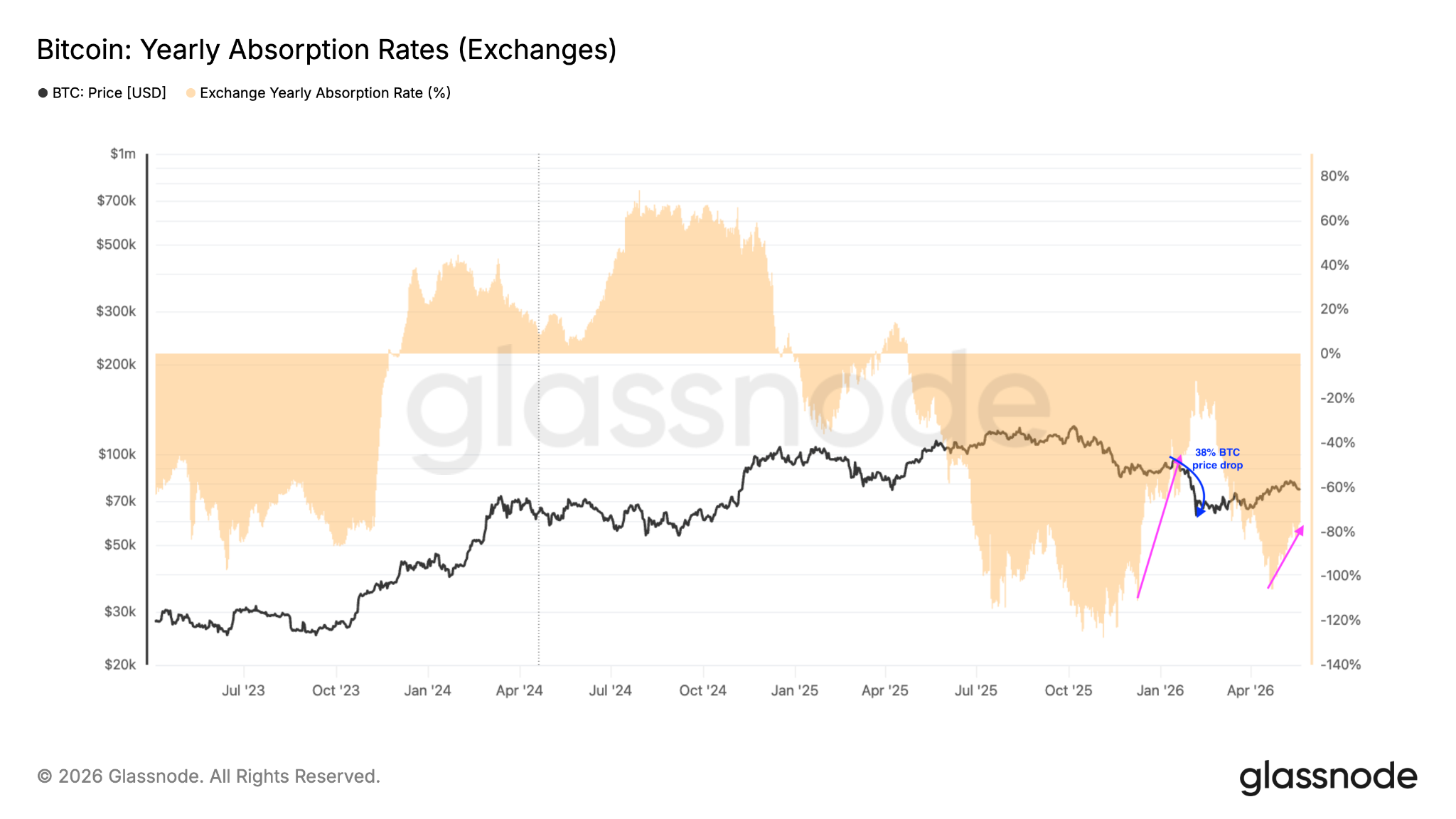
Bitcoin yearly absorption rates. Source: Glassnode
The chart above shows that a similar jump in the exchange absorption rate in January preceded a 38% BTC price decline to $60,000 from $98,000.
While large holders (100–1,000+ BTC) are scooping up more than 150% the new issuance, the rate has dropped sharply since mid-April and is significantly below the record levels seen in November 2025.
Meanwhile, the rate of accumulation among whales (entities holding more than 1,000 BTC) has dropped to -151%, its lowest in Bitcoin’s history.
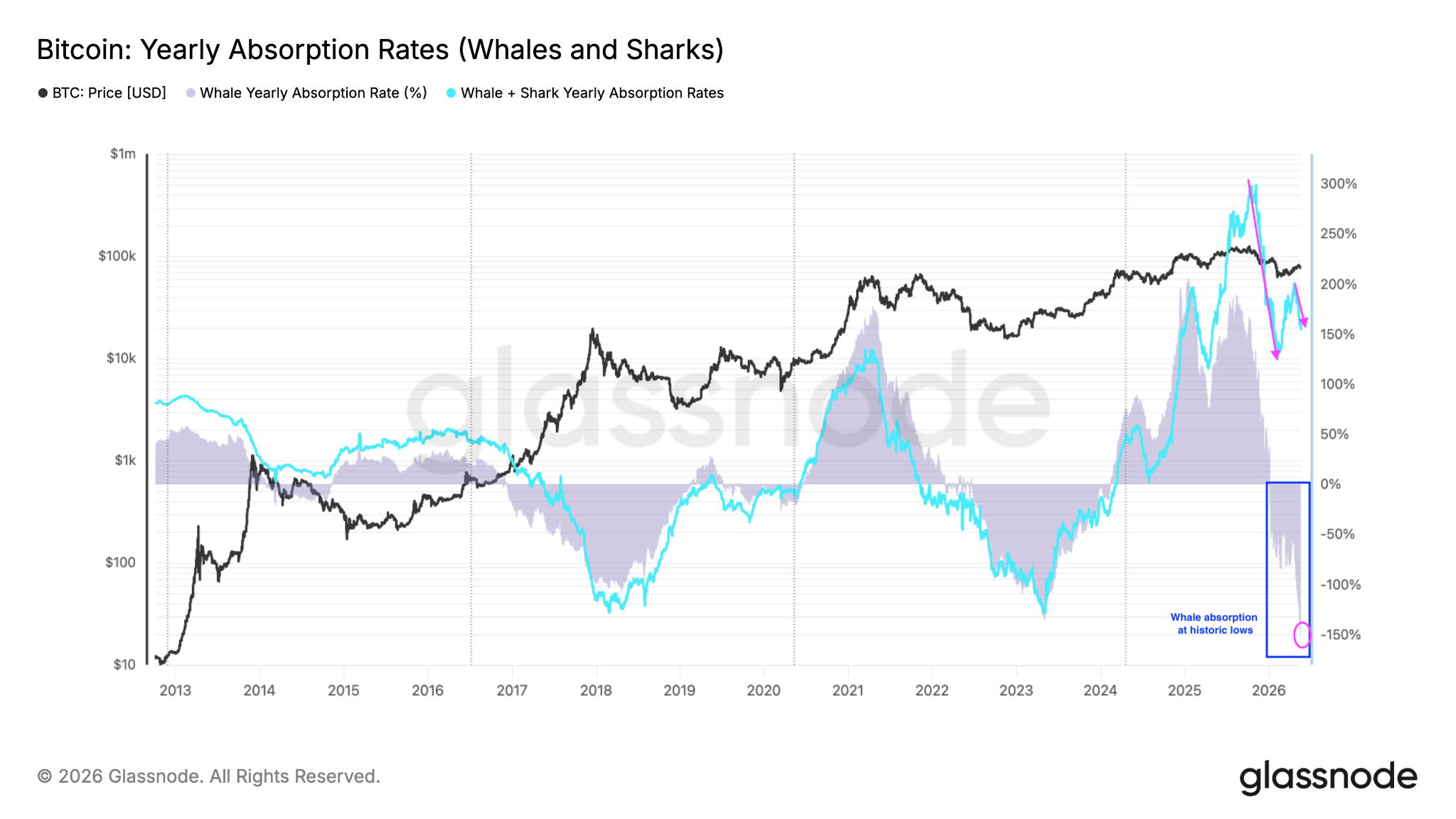
Bitcoin yearly absorption rates by whales and sharks. Source: Glassnode
This marks a shift in institutional sentiment, particularly with heavy outflows from spot Bitcoin’s exchange-traded funds, reflecting a reduction in long-term conviction among large holders.
All Bitcoin holder cohorts are “taking profits”
Bitcoin investors went risk-off, distributing their BTC as the price dropped to $76,000.
Glassnode’s Accumulation Trend Score (ATS) is near zero (light yellow), indicating that whales are selling BTC or not accumulating.
Related: Bitcoin retakes $71K as US sends Iran 15-point ceasefire plan
The drop in the trend score indicates a transition from accumulation to distribution across almost all cohorts. This shift mirrors a similar pattern observed in mid-January 2025, which aligned with Bitcoin’s drop to $60,000 in February.
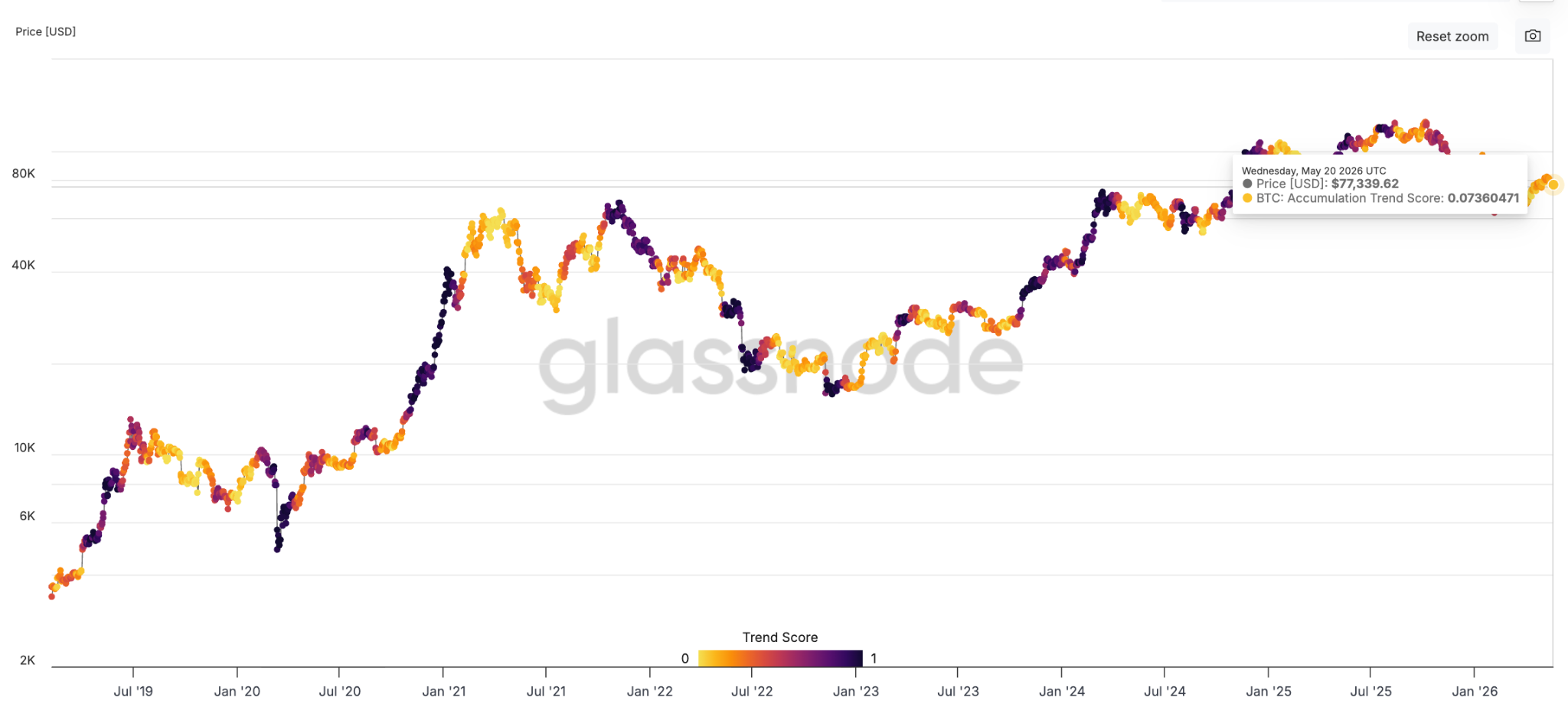
Bitcoin accumulation trend score. Source: Glassnode
Additional data from Glassnode reveals a shift toward distribution or inactivity across all investor cohorts, as seen in the chart below.
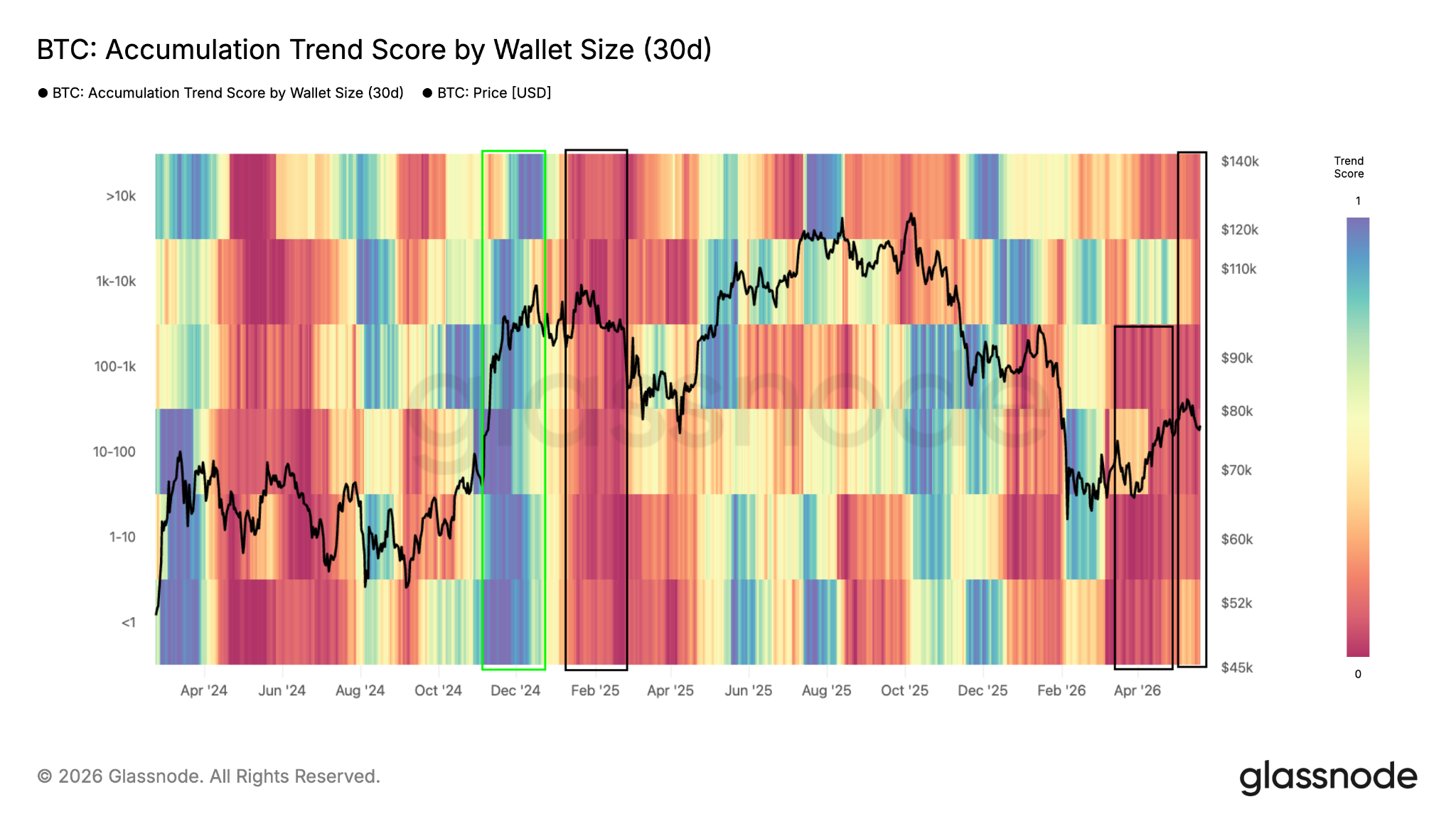
Bitcoin accumulation trend score by cohort. Source: X/Glassnode
This is in contrast to Q4 2024, where broad cohort accumulation preceded a sustained rally that saw BTC/USD trade above $100,000 for the first time in history, fueled by the 2024 US Presidential elections.
CryptoQuant analyst Woominkyu highlighted “continued selling pressure” from whales who sent more than 8,000 BTC to exchanges on Monday.
“As Bitcoin rallied to a peak of $82,196, whales began sending coins back to exchanges,” the analyst said in a QuickTake note on Thursday, adding:
“This is a classic sign of smart money selling into strength — taking profits while retail FOMO was building.”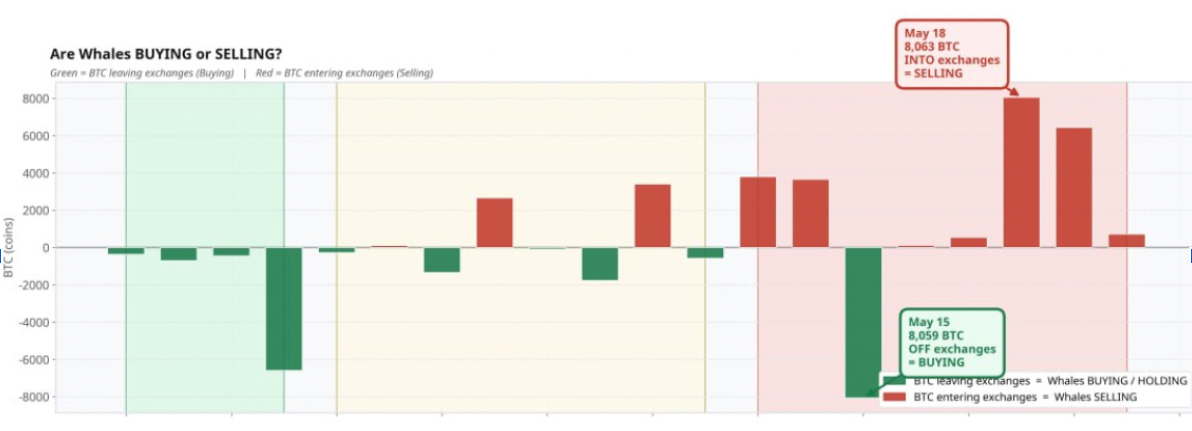
Bitcoin whale activity. Source: CryptoQuant
Bitcoin's realized losses jump to $600 million
Bitcoin’s latest correction triggered a sharp spike in realized losses. The losses by long-term holders (LTHs) reached $513.6 million on Tuesday, while losses by short-term holders (STHs) reached $101.8 million.
The aggregate realized losses across all holders reached $616 million after Bitcoin dropped to $76,000 on Monday.
This marked the highest single-day loss realization since March and an over 1,500% jump in less than two days, compared with $41.5 million on Sunday.
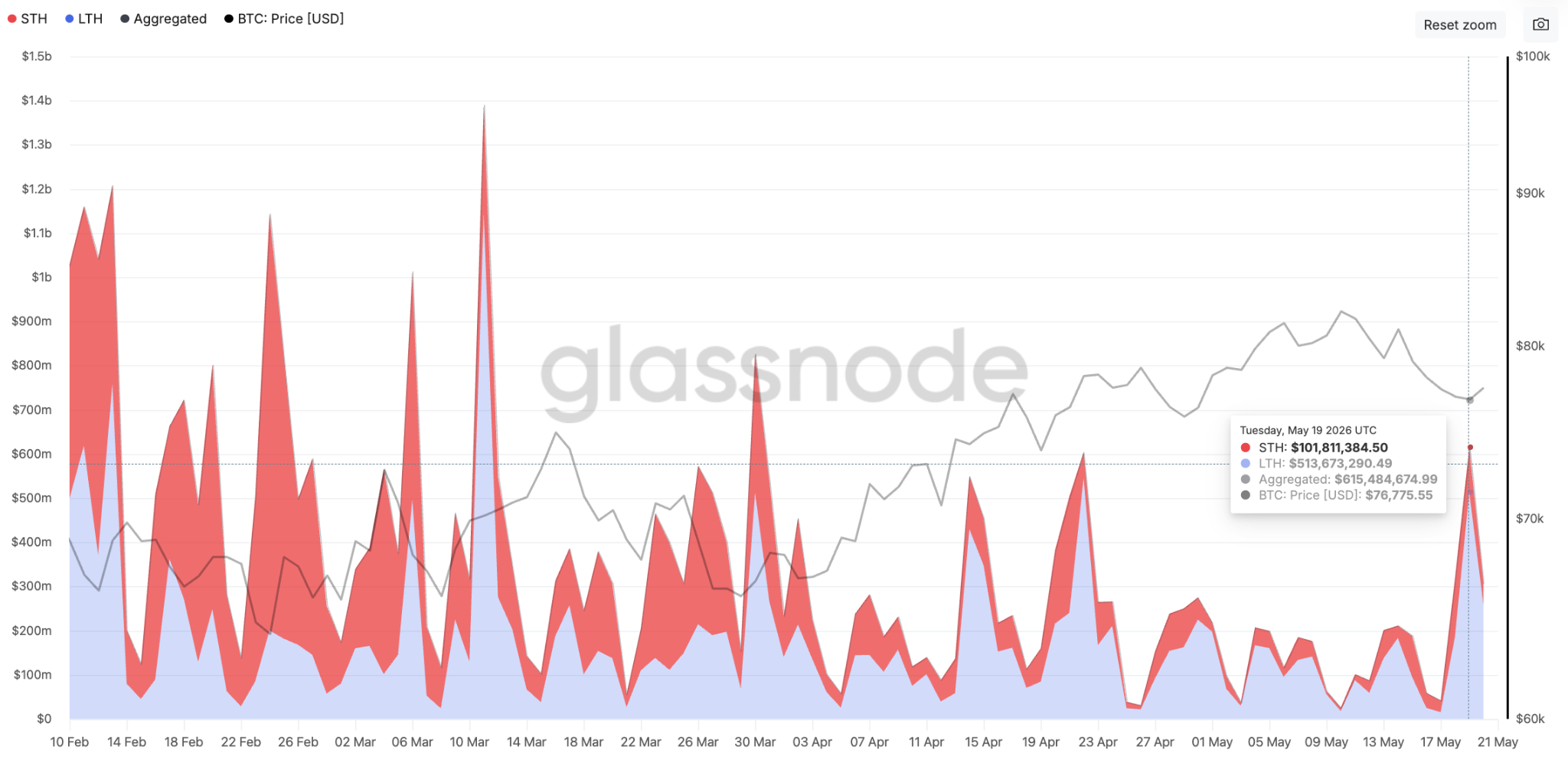
Bitcoin realized losses by LTHs and STHs. Source: Glassnode
LTHs account for the bulk of the losses, while STH losses stay comparatively contained, indicating that the stress is largely on older buyers.
As Cointelegraph reported, Bitcoin investors who have held their coins for over six months could sell near their entry price after extended drawdowns, creating strong overhead pressure that may stall Bitcoin’s recovery.
This article is produced in accordance with Cointelegraph's Editorial Policy and is intended for informational purposes only. It does not constitute investment advice or recommendations. All investments and trades carry risk; readers are encouraged to conduct independent research.
















 English (US) ·