
 1 month ago
26
1 month ago
26
Women in Blockchain Talks fosters ownership, future economy
“Everything is slowly going on chain and will be tokenized” – Ania Wiktoria, Nexus Mutual
- Ownership in digital assets and tech age
- Introducing the U.K.’s digital asset sector
- The legal landscape of property and digital assets
- Importance of global alliance of Web3 leaders
- Announcement at the Women in Blockchain Talks
Attending tech events has been a huge part of my life for over 20 years. I love an expo with fancy booths, celeb cameos, and endless freebies, but there is something special about intentional, intimate events. They nurture an unparalleled safe space for learning, questions, and dialogue.
While Women in Blockchain Talks (WIBT) events are open to all genders, the female-dominated speakers and audience of their latest event, “Power, Property & Protocols – Ownership in the Age of Digital Assets & Emerging Tech – From Consumer to Builder,” was a unique experience for me. I enjoyed lively audience participation from professionals from all walks of life, supporting one another in a sector notoriously intimidating for women. It was beautiful to observe.
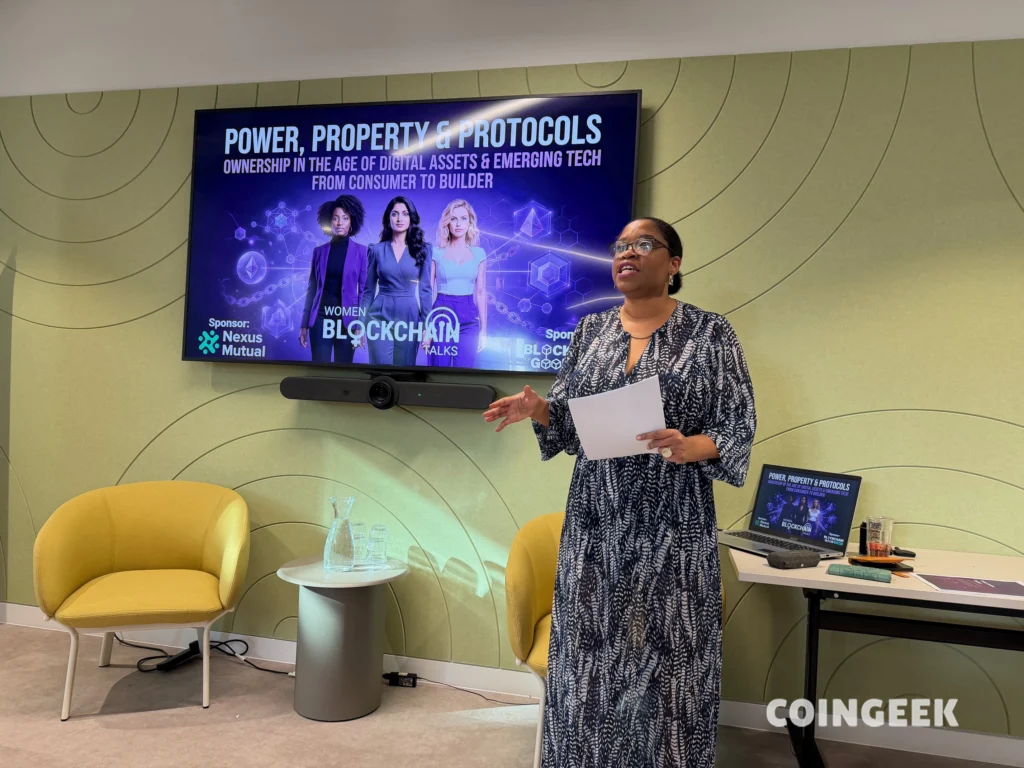
Lavinia Osbourne of WIBT, the mastermind behind the event, did an amazing job putting together an agenda that provided insights into a tokenized world, information on digital asset ownership, support for entrepreneurship, funding advice, education opportunities, calls to action, and more.
Osbourne opened the event by emphasizing it’s not just another tech convo for women, it’s an event about wealth, ownership, and participation in a future economy. She said blockchain tech has opened doors and created pathways, but we must take the time to understand it.
“I’m here to help people know what they don’t know,” Osbourne emphasized.
Following Osbourne’s introduction, Dr. Lisa Cameron, former U.K. Member of Parliament and Crypto APPG Chair, delivered a presentation on U.K. Technology Policy. She confirmed that there are 4 million people involved in the U.K. crypto and digital assets sector, but a reputation for “scams and cowboys” in crypto still exists in Parliament. The lack of regulatory clarity certainly does not help.
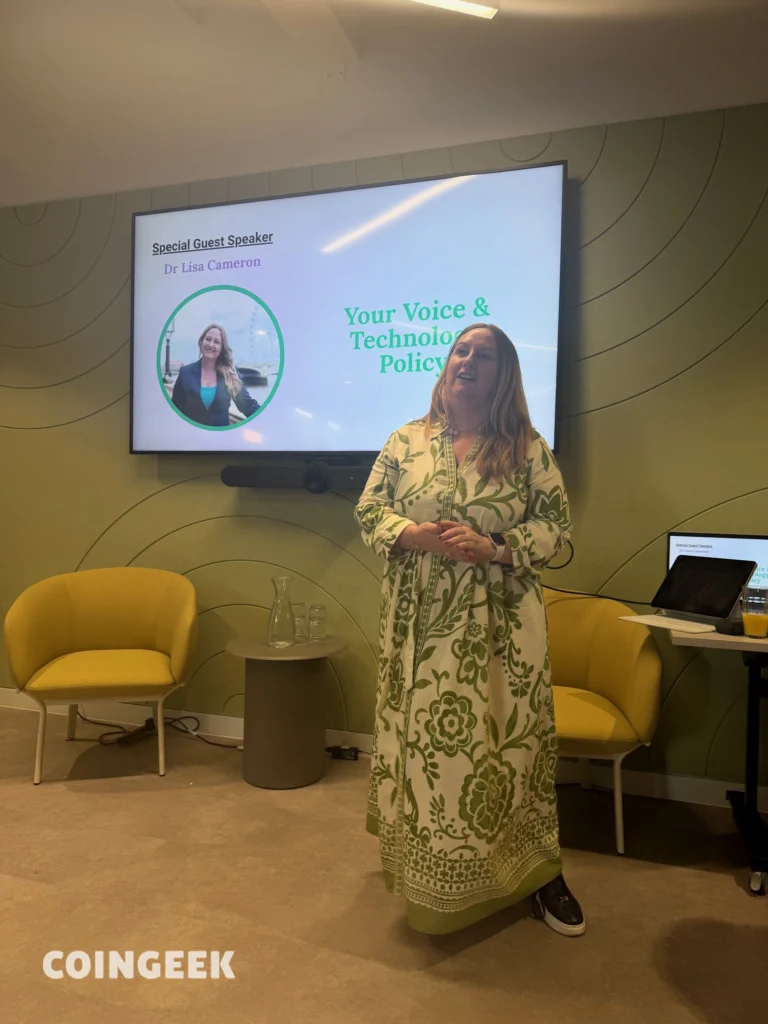
To help push regulations along, Cameron urged the audience to contact their MPs, as most don’t understand blockchain and think it’s a passing fad. “It’s important to speak with them about why this industry is important to you—only then will MPs know that this is an industry that is changing lives and matters to their voters,” she said.
If you’re not sure how to contact your MP, Osborne put together a policy action toolkit in partnership with Cameron (of course she did!), and you can download it here.
Up next was a fireside chat on the legal landscape of property and digital assets with Ania Wiktoria of decentralized insurance alternative Nexus Mutual. She confirmed there is now a third category in property law: “a thing that is digital or electronic in nature does not prevent it from being a property.”
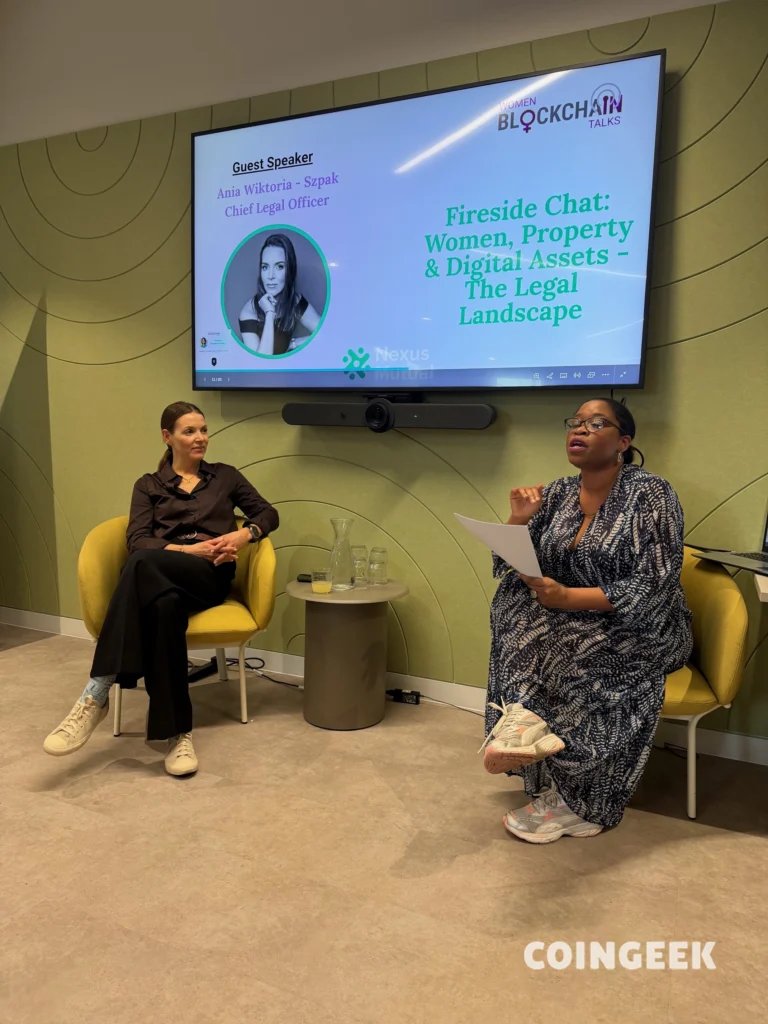
This new category in property law allows tokens to be leveraged as collateral, and as a founder/startup, you can go to the bank and get a loan using these assets.If you’re a digital currency holder, you can enforce your rights in law, meaning it’s much faster and cheaper because the ambiguity has been removed.
The Blockchain for Good Alliance (BGA) introduction with Tiffany Wang was up next, a group she defined as a global alliance of web3 leaders. She said BGA supports invisible blockchain integration, the rise of digital public infrastructure, AI and blockchain convergence, institution-led adoption, and outcome-driven regulation.
Conversations around technology shouldn’t slow down; they should go deeper.
Women in Blockchain Talks brought together leaders and founders to explore how digital assets fit into real businesses, what digital ownership truly means, and what it takes to be a good leader.
It’s essential to bring the conversation upwards (to governments, UN, etc) and to have an academy to educate these bodies, according to Wang. “This is what we are excited about,” she said.
Wang added that the whole “crypto bros” scene still plagues the reputation of blockchain and is frowned upon in the tech world, especially in AI. She reminded the audience that crypto is just one use case of blockchain, and we can do so much more with the tech.
Following Wang’s presentation was the “From Consumer to Builder” panel with Wang and Sandra Tusin, investor and co-founder of NFT Soho. Tusin highlighted how fast things are moving in the startup scene with vibe coding. She added that one of the biggest opportunities is in wallets linked to digital ID because of the trust issue in AI right now—we don’t know who is real and who is not.
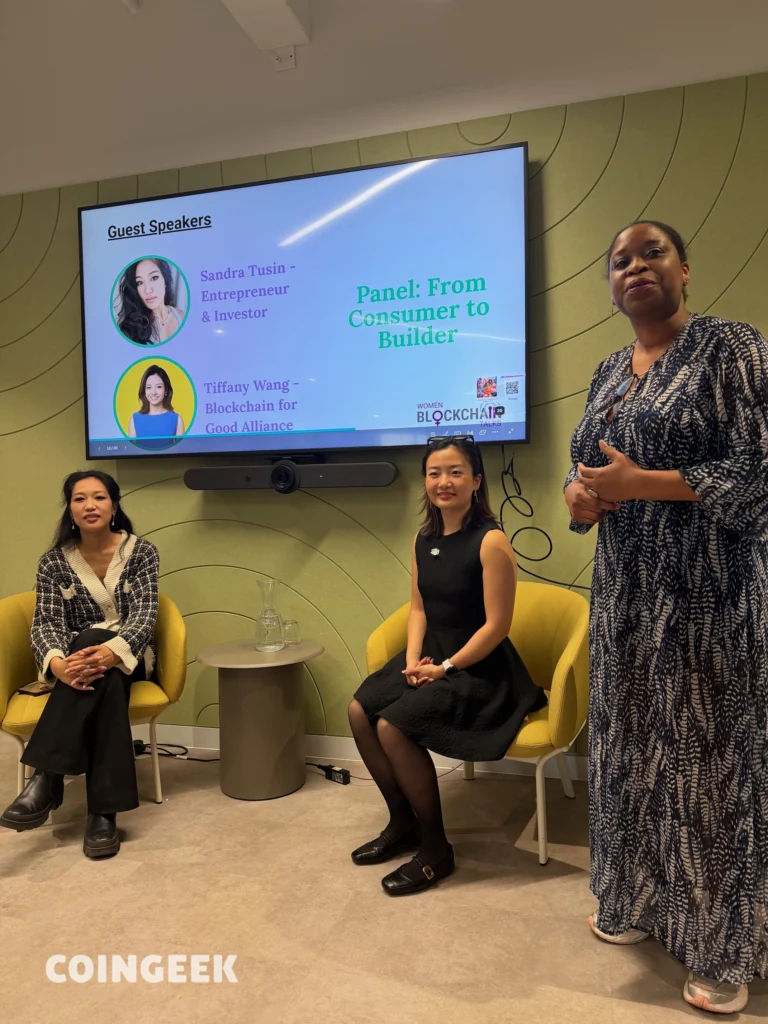
Wang added that startups cannot create problems; they should identify problems and create solutions to fix them. They must be passionate about solving these problems, she said. “Anyone can have an idea, it’s how you execute,” added Tusin.
Last up were two announcements: the WiBT Accelerator Launch and a “Tokenization 101 for Entrepreneurs” course launch.
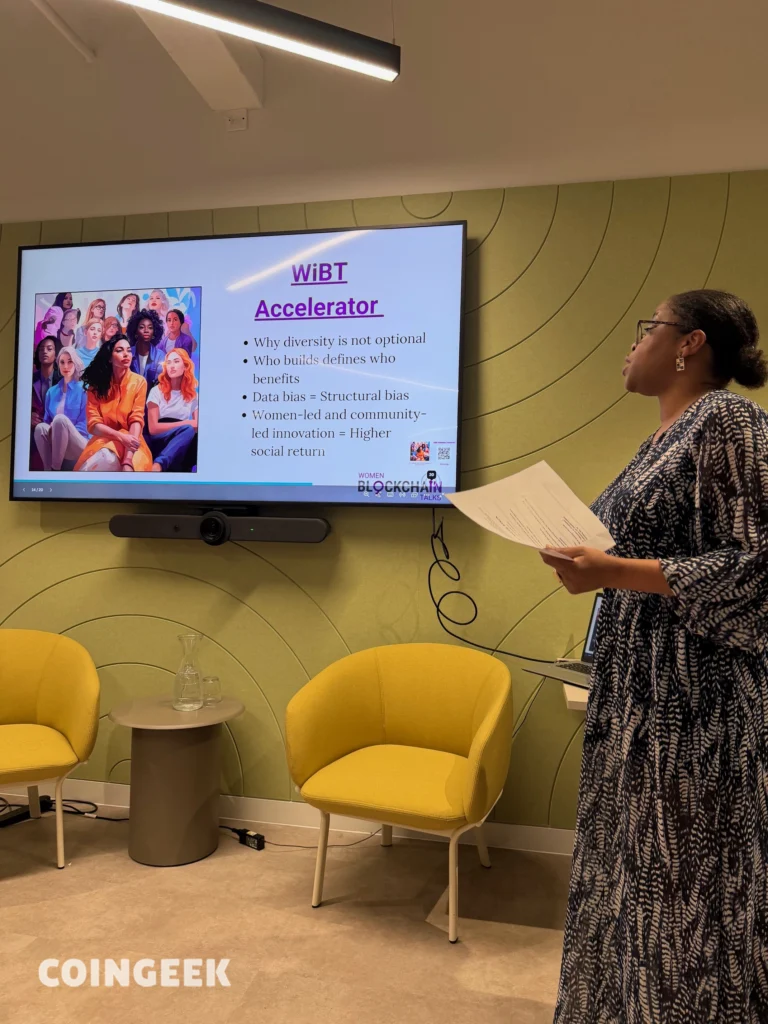
Osbourne revealed the accelerator is for non-technical founders, women/under-represented founders, solo founders, projects with blockchain infrastructure, and projects with social impact/sustainability. She wanted to create an accelerator that includes all of these attributes and invites eligible founders to complete this market survey to stay informed.
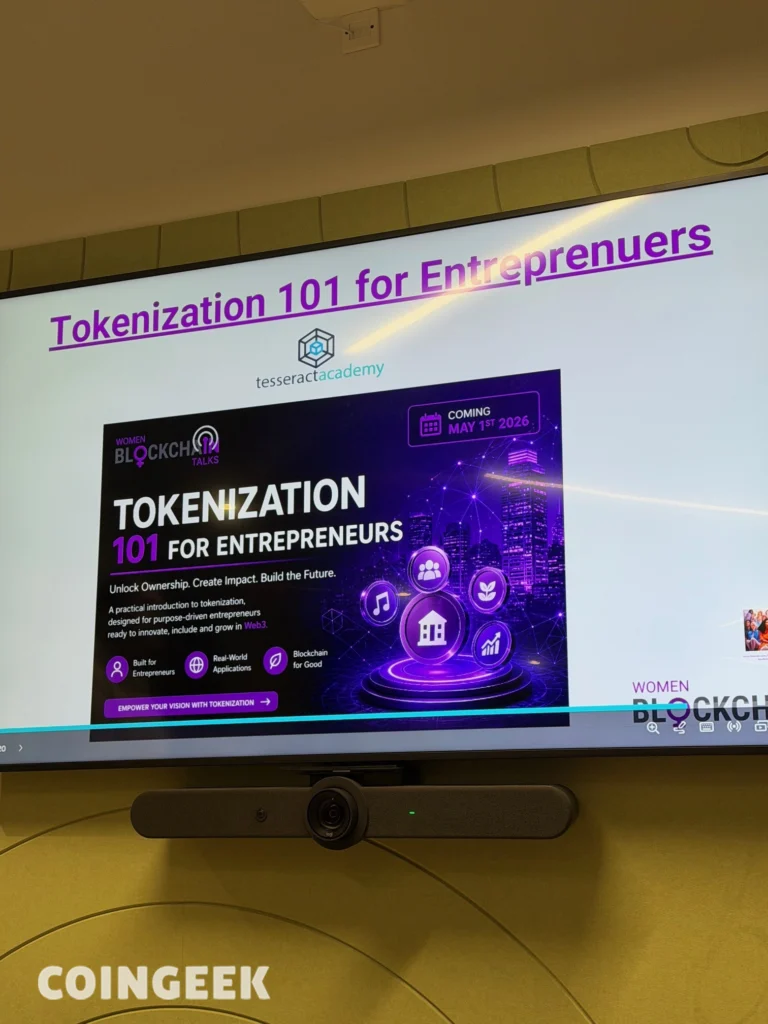
The Tokenization 101 course, in partnership with Tesseract Academy, will launch on May 1 and align with the accelerator. This course has been designed to help non-technical professionals- especially founders and entrepreneurs make the most out of Web3 and AI. If you complete the market survey, you’ll receive early access to the accelerator and also this course.
So what are you going to build?
Watch: “Women in Blockchain are ____.” (The Experts Answer)









 English (US) ·