
 14 minutes ago
1
14 minutes ago
1
WiseTech Global, the Australian logistics software company behind the widely-used CargoWise platform, has started executing one of the largest AI-driven workforce reductions in the enterprise software sector. The company is eliminating roughly 2,000 positions, nearly 30% of its 7,000-person global workforce spread across 40 countries.
The stock market loved it. WiseTech shares (ASX: WTC) jumped 11.1% on the day the restructuring was announced in February. Nothing says “shareholder value” quite like telling 2,000 people their jobs are being handed to machines.
What WiseTech is actually doing
CEO Zubin Appoo framed the cuts in stark terms.
“The era of manually writing code as the core act of engineering is over.”
In English: WiseTech believes AI tools can now handle enough of the software development, production, and customer service workload that it no longer needs nearly a third of its humans. The company plans to weave AI directly into both its CargoWise logistics platform and its internal operations.
More than 500 roles had already been eliminated in the current financial year before the broader announcement landed. So the actual headcount reduction is even steeper than the 2,000 figure suggests when you account for positions already gone.
The phased layoffs are expected to unfold over the next 18 to 24 months. That timeline means thousands of employees are now sitting in a professional limbo, unsure whether their specific role survives. Internal criticism has reportedly followed, which is about as surprising as water being wet.
WiseTech isn’t a scrappy startup making a bold gamble. It’s an ASX-listed company with a substantial market presence in global logistics technology. When a firm of this size and maturity says “AI replaces this many people,” other enterprise software companies pay attention.
The AI employment thesis goes mainstream
Here’s the thing. WiseTech’s move is one of the clearest real-world examples of a company explicitly linking AI capabilities to mass workforce reduction, not as a vague future possibility, but as a concrete plan with numbers and timelines attached.
Most tech companies have danced around this. They talk about AI “augmenting” human workers, or “freeing up” employees for higher-value tasks. WiseTech skipped the euphemisms. It said the coding era is over and cut 30% of its people.
This matters beyond the logistics software niche because it validates a thesis that has driven billions of dollars in investment across both traditional tech and crypto markets. The argument goes: AI is not just a productivity tool, it’s a labor replacement technology at scale. WiseTech just provided one of the most direct corporate endorsements of that argument to date.
The 11.1% stock pop on announcement day tells you exactly how the market interpreted it. Investors are rewarding companies that aggressively lean into AI-driven cost structures, even when the human cost is measured in thousands of jobs.
What this means for investors watching AI and crypto
WiseTech has no cryptocurrency holdings, no token, and no blockchain integration that we know of. So why does this matter for crypto investors? Because narrative drives capital flows, and the AI narrative is increasingly intertwined with digital asset markets.
AI-adjacent tokens and projects have attracted significant speculative interest over the past couple of years. Every time a major corporation validates the AI transformation thesis with real restructuring decisions, rather than just conference keynotes, it reinforces the investment case for projects building at the intersection of AI and blockchain.
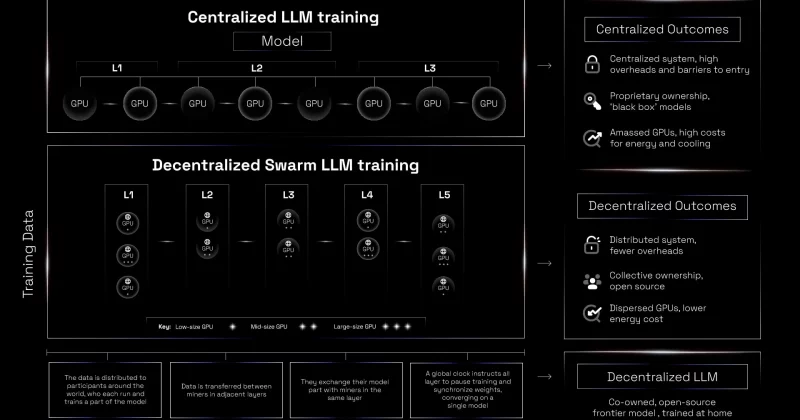
Look at it from a capital allocation perspective. When traditional enterprises like WiseTech demonstrate measurable cost savings from AI integration, it signals to venture funds and institutional investors that AI infrastructure spending will continue to accelerate. Some of that spending inevitably flows toward decentralized compute networks, AI training data marketplaces, and other crypto-native projects positioning themselves as essential AI infrastructure.
The risk, of course, is that the crypto-AI narrative has always been ahead of the reality. Many AI tokens trade on vibes and association rather than actual revenue or utility. A logistics company firing 2,000 people because of AI doesn’t automatically make a decentralized GPU rental network more valuable. The connection is thematic, not mechanical.
But thematic connections move markets, especially in crypto. The more corporate boardrooms explicitly credit AI with replacing human labor, the more conviction builds around AI-related investment themes across every asset class.
For investors tracking this space, the signal from WiseTech is less about the specific company and more about the speed of adoption. An 18-to-24-month timeline for a 30% workforce reduction suggests that AI integration in enterprise software has moved from experimental to operational faster than many forecasts predicted. If other mid-to-large cap software firms follow WiseTech’s lead, which the stock market reaction practically incentivizes them to do, the AI capital cycle could accelerate further, pulling crypto-native AI projects along with it.
The counterpoint worth watching: if the layoffs create operational problems, if CargoWise quality degrades, if customer churn spikes, that would be a meaningful data point suggesting the market is overpricing AI’s ability to replace skilled workers. For now, though, WiseTech and its shareholders are betting that the machines are ready.
Disclosure: This article was edited by Editorial Team. For more information on how we create and review content, see our Editorial Policy.













 English (US) ·