
 2 hours ago
1
2 hours ago
1
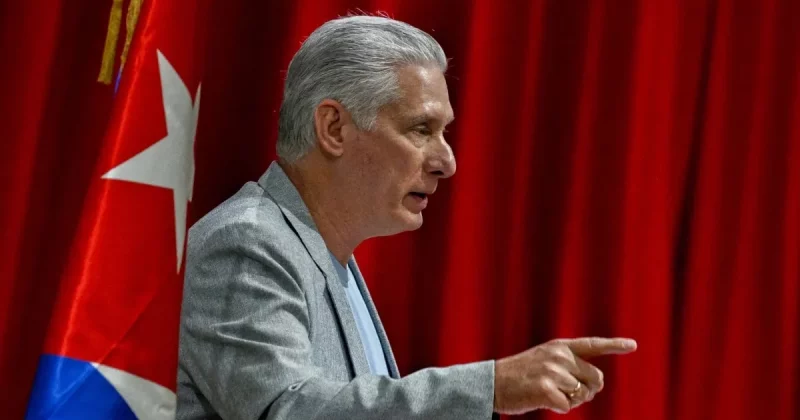
The US Department of the Treasury’s Office of Foreign Assets Control (OFAC) and the Department of State sanctioned Cuban President Miguel Díaz-Canel Bermúdez on June 4, targeting the island nation’s top leader with direct asset freezes for the first time under the current administration’s Cuba policy.
Four additional individuals were also designated, including members of Díaz-Canel’s family and significant figures in Cuba’s military apparatus. Five entities, among them the Ministry of the Revolutionary Armed Forces (MINFAR) and the Cuban Institute of Friendship with the Peoples (ICAP), were added to the Specially Designated Nationals (SDN) list.
What the sanctions actually do
The designations were made under Executive Order 14404, signed on May 1, 2026. That order authorizes sanctions against Cuban officials and their families who are involved in the country’s defense, mining, and financial sectors.
In practical terms, any assets held by these individuals or entities within US jurisdiction are now frozen. American persons and companies are prohibited from conducting transactions with them. That prohibition extends to any entity owned 50% or more by a designated party.
The action also builds on sanctions imposed earlier in May 2026 that targeted entities such as GAESA, Cuba’s military-run business conglomerate. This latest round represents an escalation from previous measures, which had largely focused on visa restrictions rather than direct financial freezes aimed at the country’s sitting president.
The inclusion of members of Raúl Castro’s family among the designated individuals signals a broader strategy targeting the network of family and institutional connections that have sustained Cuba’s political establishment.
Why crypto platforms should pay attention
When OFAC adds someone to the SDN list, every crypto exchange, wallet provider, and DeFi protocol with any US nexus needs to screen for those addresses. No specific digital assets or crypto wallets have been publicly linked to the sanctioned individuals so far.
The risk is that downstream transactions, remittances, peer-to-peer trades, or other financial flows involving Cuban nationals could inadvertently touch a sanctioned party. OFAC has shown repeatedly that it’s willing to bring enforcement actions against crypto firms. The Tornado Cash sanctions in 2022 demonstrated that the agency views digital asset infrastructure as squarely within its jurisdiction.
The broader geopolitical picture
Cuba has been subject to US sanctions in various forms for more than six decades. The trade embargo, originally imposed in 1962, remains one of the longest-running economic restrictions in modern history.
Sanctioning MINFAR, which controls significant portions of Cuba’s economy through military-run enterprises, is a direct attempt to squeeze the regime’s revenue streams. The designation of ICAP effectively poisons any financial relationship it maintains with US-connected parties.
No specific tokens or protocols have seen price movement attributable to the Cuba sanctions. But the compliance burden is cumulative, with each new round of designations adding to the operational overhead that digital asset firms must absorb.
Disclosure: This article was edited by Editorial Team. For more information on how we create and review content, see our Editorial Policy.






 English (US) ·