
 1 hour ago
1
1 hour ago
1
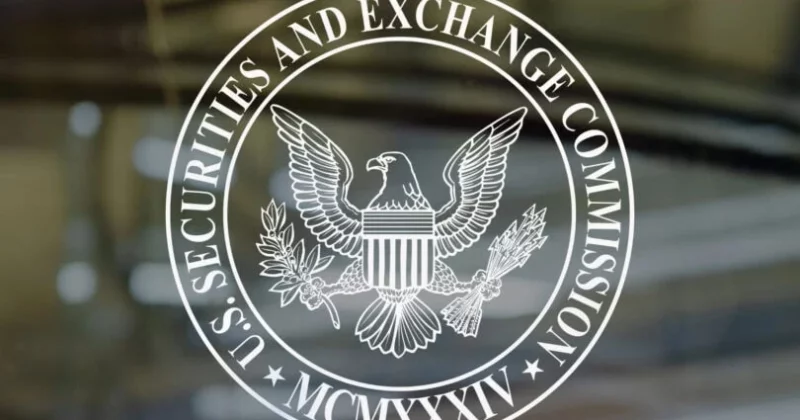
The US Supreme Court just handed federal regulators two major wins on the same day. On June 4, the Court affirmed both the FCC’s power to impose civil forfeiture penalties and the SEC’s ability to claw back profits from wrongdoers, even without proving that investors actually lost money.
What the Court actually decided
The first case, FCC v. AT&T, Inc. (No. 25-406), came down 8-1. At its core, AT&T argued that the FCC’s two-stage process for imposing civil forfeiture penalties, where the agency first determines a violation administratively and then enforces the penalty through federal court, violates the Seventh Amendment right to a jury trial.
The Court disagreed. The majority held that because judicial enforcement remains available in federal courts when needed, the mechanism passes constitutional muster.
The ruling also resolved a circuit split that had been creating regulatory chaos. The Fifth Circuit had sided with carriers challenging the FCC’s authority, while the Second and D.C. Circuits had upheld it. That disagreement, involving major carriers like AT&T and Verizon, is now settled.
The second case, Sripetch v. SEC (No. 25-466), was unanimous at 9-0. Justice Neil Gorsuch wrote the opinion, which affirmed the SEC’s power to seek disgorgement of ill-gotten profits without needing to demonstrate that specific investors suffered actual financial losses.
Gorsuch grounded the decision in traditional equitable principles. The idea is straightforward: if someone cheats, you strip them of their net gains. You don’t need to first prove that a specific victim’s bank account shrank by a specific dollar amount.
Why this matters beyond telecom and traditional securities
These rulings arrive in the aftermath of the 2024 SEC v. Jarkesy decision, which had imposed meaningful restrictions on the SEC’s ability to use in-house administrative law judges for certain civil penalty cases. The June 4 decisions effectively counterbalance Jarkesy. While the SEC still faces limits on in-house adjudication for some penalty types, its disgorgement powers are now on firmer legal ground. The Sripetch ruling builds on the framework established in Liu v. SEC (2020), which first confirmed disgorgement as a legitimate equitable remedy but capped it at net profits.
For the FCC, the resolved circuit split means telecommunications companies operating nationally can no longer forum-shop for friendlier courts on enforcement challenges. The agency’s penalty authority now applies uniformly across the country.
These rulings follow the overturning of Chevron deference in 2024. The Supreme Court is affirming that while agencies may face new procedural constraints, their fundamental enforcement powers remain intact.
What this means for investors and market participants
The SEC has aggressively pursued disgorgement in cases involving digital asset firms, and the Sripetch ruling removes a key legal defense available to targets of those actions. Previously, a company or individual facing SEC enforcement could argue that if no investors demonstrably lost money, perhaps through a token price recovering after an alleged violation, disgorgement was inappropriate.
That argument is now dead at the Supreme Court level.
The FCC ruling carries its own implications for the broader tech and communications sector. Companies that might have been inclined to challenge agency penalties through aggressive litigation now face a Supreme Court precedent that explicitly endorses the existing enforcement framework.
Disclosure: This article was edited by Editorial Team. For more information on how we create and review content, see our Editorial Policy.












 English (US) ·