
 1 hour ago
2
1 hour ago
2
The ceasefire between the US and Iran, barely a month old, is cracking under the weight of renewed military exchanges in the Strait of Hormuz. What was supposed to be a two-week cooling-off period brokered by Pakistan on April 8 has devolved into something that looks a lot more like a ceasefire in name only.
For crypto markets, this isn’t just a geopolitics story playing out on cable news. Iran’s pivot to digital assets for sanctions evasion, combined with the US government’s aggressive response targeting those networks, has turned the Strait of Hormuz standoff into one of the most consequential geopolitical catalysts for digital asset prices this year.
From truce to turbulence
The original ceasefire was announced on April 8, 2026, mediated by Pakistan and designed to de-escalate months of rising tensions around the strait. President Trump later extended the truce indefinitely.
Between May 4 and May 7, clashes intensified dramatically. The US conducted strikes against Iranian missile sites and boats, describing the actions as self-defense against perceived threats. Iran characterized the strikes as unprovoked aggression and retaliated against US vessels.
Both sides still claim the ceasefire is technically in effect.
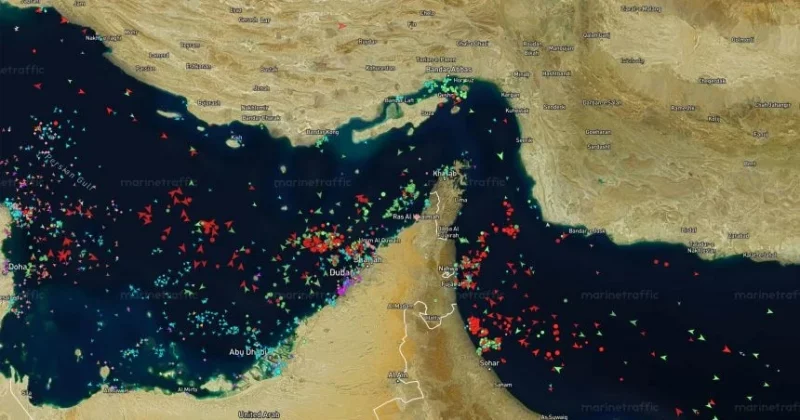
The strait has experienced repeated closures since February 2026, disrupting one of the world’s most critical oil transit routes. Roughly a fifth of the global oil supply passes through this narrow waterway on any given day. Commercial shipping vessels, including those operated by Maersk, are now traveling under US military escort.
Negotiations are reportedly underway for a longer-term resolution. The framework being discussed includes a potential 60-day extension of the ceasefire, along with talks about reopening the strait and restarting nuclear negotiations.
Iran’s crypto pivot and the $7.7B crackdown
Iran has proposed using Bitcoin and stablecoins for tolls and insurance on maritime shipping through the strait, seeking to collect fees for passage through waters it partially controls in crypto because traditional banking rails are blocked by sanctions.
The US response has been equally aggressive on the digital front. American authorities have sanctioned and targeted Iranian digital asset networks valued at approximately $7.7 billion.
What this means for investors
Bitcoin dipped below $80,000 during the May clashes, a direct reaction to the escalation in hostilities. Prices recovered as signals of de-escalation emerged.
The US campaign against Iran’s $7.7B in digital asset holdings could create collateral damage across the broader crypto ecosystem. Increased scrutiny on stablecoin flows, tighter compliance requirements on exchanges, and more aggressive use of blockchain analytics tools are all likely consequences.
Traders should be watching three things closely: progress on the proposed 60-day ceasefire extension, any new US enforcement actions against Iranian crypto networks, and the status of commercial shipping through the strait.
Disclosure: This article was edited by Editorial Team. For more information on how we create and review content, see our Editorial Policy.













 English (US) ·