
 1 hour ago
3
1 hour ago
3
US Central Command is actively disabling oil tankers in the Gulf of Oman that ignore warnings and attempt to reach Iranian ports. The operations represent a significant escalation in the enforcement of a naval blockade designed to choke off Iran’s oil export capabilities.
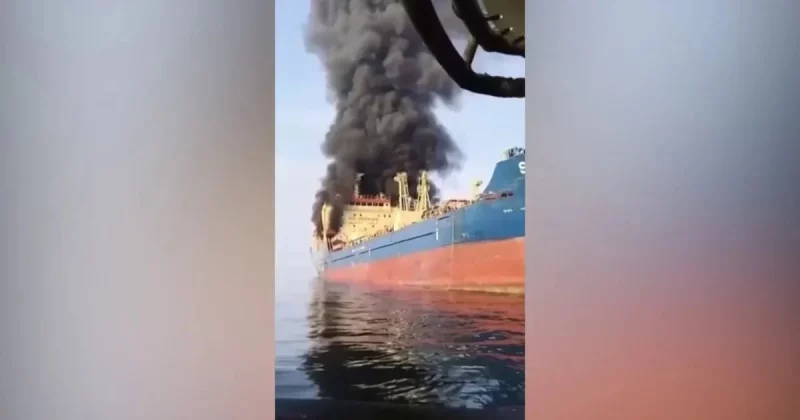
The campaign has unfolded rapidly over recent days. On May 6, 2026, CENTCOM disabled the Iranian-flagged M/T Hasna by targeting its rudder with cannon fire from an F/A-18 Super Hornet launched from the USS Abraham Lincoln. Two days later, on May 8, the M/T Sea Star III and M/T Sevda were hit with precision munitions fired from an F/A-18 operating off the USS George H.W. Bush.
All three vessels were unladen oil tankers, meaning they were heading toward Iran empty, presumably to load crude for export.
What the blockade looks like in practice
The pattern across these incidents is consistent. Vessels receive warnings. They ignore those warnings. Then they get disabled by precision fire from carrier-based aircraft.
CENTCOM has released video footage of the disabling actions, a move that serves both as documentation and deterrence. Each of the targeted tankers was confirmed to no longer pose a threat after being disabled, according to CENTCOM.
The deployment of two carrier strike groups, the USS Abraham Lincoln and the USS George H.W. Bush, underscores the scale of the operation.
The oil market ripple effect
Oil price volatility tends to spike during periods of active military enforcement in shipping chokepoints. The Gulf of Oman sits adjacent to the Strait of Hormuz, through which roughly a fifth of the world’s oil supply flows daily.
Disclosure: This article was edited by Editorial Team. For more information on how we create and review content, see our Editorial Policy.











 English (US) ·