
 1 hour ago
4
1 hour ago
4
Upexi, the Nasdaq-listed company that pivoted from selling consumer products to hoarding Solana tokens, will be added to the Russell Microcap Index on June 29. It’s the kind of milestone that sounds dry on paper but can meaningfully change a small company’s investor base overnight.
The Russell Microcap Index tracks the smallest publicly traded companies in the US, and roughly $12.2 trillion in assets are benchmarked to Russell’s family of indexes. When a stock gets added, every index fund and ETF tracking that benchmark has to buy shares, whether they want to or not.
From consumer goods to crypto treasury
Upexi’s journey to this point has been anything but conventional. The company, trading under the ticker UPXI, started life as a consumer products firm. It still operates legacy brands in that space. But the real story began in 2025, when management decided the future lay in digital assets.
The initial foray was into Bitcoin. Then came the pivot that set Upexi apart: a full-throated embrace of Solana.
Today, Upexi holds over 2.17 million SOL tokens. Recent valuations place that stash somewhere between $147 million and $158 million, depending on where Solana’s price happens to be sitting on any given day. For a microcap company, that’s a staggering concentration in a single digital asset.
The strategy isn’t just about holding, either. Upexi actively stakes its SOL holdings to generate yield, essentially putting its treasury to work.
The Solana bet in context
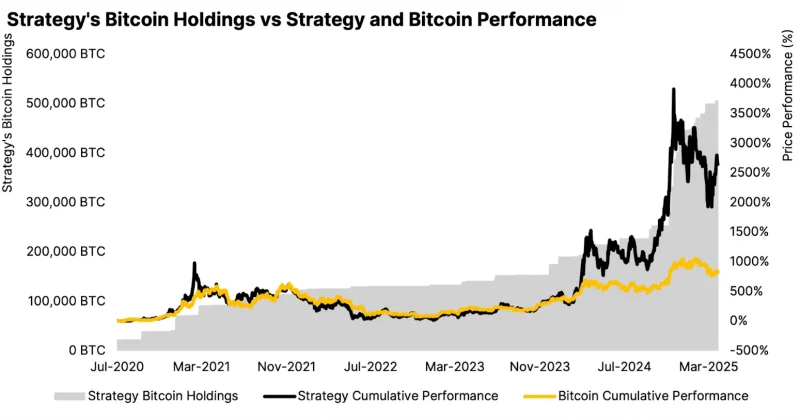
Upexi isn’t operating in a vacuum. MicroStrategy, now known as Strategy, essentially wrote the playbook with Bitcoin. But where Strategy went with the largest and most established cryptocurrency, Upexi is making a concentrated bet on Solana.
CEO Allan Marshall has steered the company through this transformation while maintaining the legacy consumer product operations.
The company has funded its SOL accumulation through a combination of capital raises and share buybacks. The capital raises bring in fresh money to buy more Solana, while the buybacks signal that management believes the stock is undervalued relative to the assets on its balance sheet.
What this means for investors
The immediate impact of Russell inclusion is mechanical. Index funds will need to purchase shares, creating demand that doesn’t depend on anyone’s opinion about Solana, crypto markets, or Upexi’s business model.
Upexi is, at its core, a leveraged bet on Solana wrapped in a public equity shell. If SOL appreciates, the company’s treasury grows and the stock likely follows. If SOL drops 30%, Upexi’s balance sheet takes a significant hit, and there’s no diversified revenue stream large enough in the legacy business to cushion that blow.
The risk side of the ledger is worth examining carefully. Holding over 2 million SOL tokens means Upexi’s fortunes are tightly correlated with a single asset. There’s no hedging mentioned, no diversification across multiple chains or tokens.
Disclosure: This article was edited by Editorial Team. For more information on how we create and review content, see our Editorial Policy.








 English (US) ·