
 1 hour ago
2
1 hour ago
2
President Donald Trump announced that the Strait of Hormuz will remain open and toll-free without significant outside enforcement, pointing to the framework peace deal reached with Iran. The declaration, made via Truth Social on June 14-15, marks what could be the most consequential geopolitical development of 2026, if the deal holds.
The strait has been blocked since February 28, when Iran shut down the waterway amid escalating tensions with the US and Israel. For nearly four months, one of the planet’s most important shipping lanes has been a geopolitical hostage. That era, Trump suggests, is ending.
What the deal actually says
The framework agreement centers on two core commitments: a toll-free reopening of the Strait of Hormuz to international shipping, and an end to the US naval blockade of Iranian ports.
Iranian officials have confirmed the agreement. Deputy Foreign Minister Kazem Gharibabadi called the deal finalized in principle, with a formal signing anticipated around June 20 in Switzerland.
Vice President JD Vance reinforced the administration’s position, stating that the strait will operate toll-free for the long term.
The negotiations involved mediators including Pakistan and Qatar. Nuclear issues, notably, are not part of this framework. Those discussions have been deferred to future rounds, making this deal more of a ceasefire than a comprehensive resolution.
Why the strait matters to everything
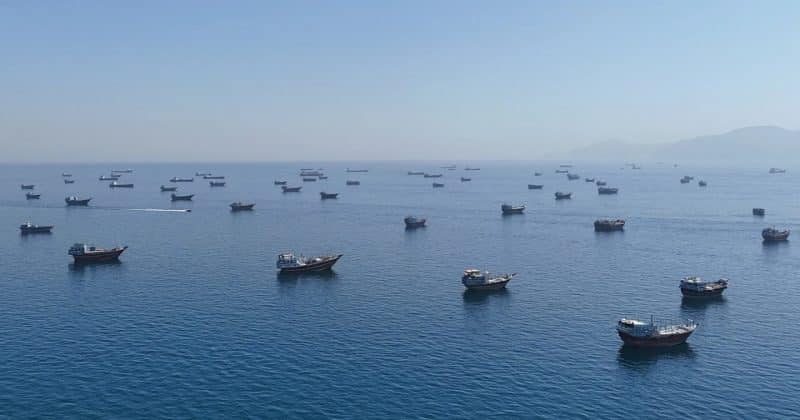
The Strait of Hormuz is a narrow passage between Iran and Oman, and it handles a massive share of the world’s seaborne oil trade. When Iran closed it on February 28, the immediate effect was a spike in global energy prices and a scramble among importers to find alternative supply routes.
What this means for crypto investors
The Iran deal doesn’t mention Bitcoin, Ethereum, or any digital asset. Market attention has been focused primarily on energy and shipping sectors, anticipating relief from oil supply constraints over the coming months.
The risk, of course, is that the deal falls apart. The formal signing hasn’t happened yet. Nuclear discussions remain unresolved. If the agreement collapses before or shortly after the June 20 signing, energy markets would reprice violently.
Traders should also consider that markets have likely begun pricing in the reopening already. The announcement itself has been public for days. The gap between a Truth Social post and a signed treaty in Switzerland is exactly where geopolitical risk lives.
Disclosure: This article was edited by Editorial Team. For more information on how we create and review content, see our Editorial Policy.








 English (US) ·