
 1 hour ago
1
1 hour ago
1
Sunrun, the largest residential solar and battery storage company in the US, just announced something that sounds like it was cooked up in a crypto whitepaper circa 2021: turning people’s homes into a distributed network of AI data centers. The difference is that Sunrun has 1.1 million home systems already installed and a NASDAQ ticker (RUN) to go with the vision.
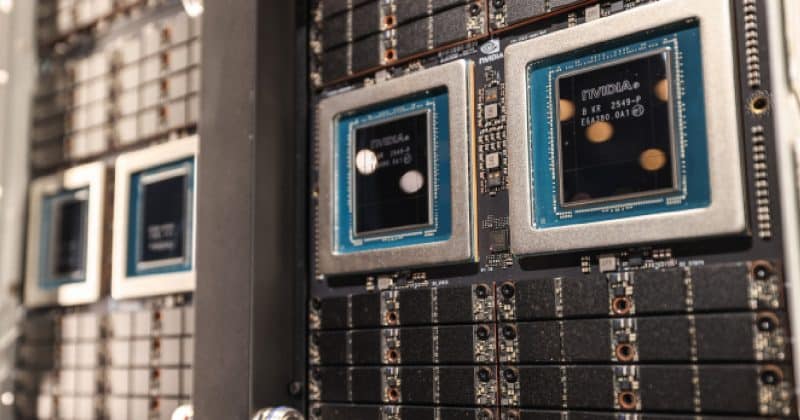
The company is launching a pilot program that will place AI compute nodes inside homes already equipped with Sunrun solar panels and battery storage. Homeowners get compensated for hosting the hardware. Sunrun sells the resulting compute power to enterprise clients, particularly AI companies hungry for inference capacity.
How distributed AI compute actually works here
Sunrun’s pilot will install compute units in participating customers’ homes, tapping into the solar and battery infrastructure already in place to power them. These nodes handle AI inference workloads, the kind of computing that runs trained AI models rather than training new ones.
McKinsey projects AI inference workloads will grow by roughly 35% annually, potentially surpassing training workloads as the dominant use case by 2030. That’s the market Sunrun is chasing.
The appeal for enterprise buyers is twofold. First, distributed nodes located in homes across the country can deliver low-latency computing, getting answers to users faster by being physically closer to them. Second, it sidesteps the brutal bottlenecks that plague traditional data center buildouts: land acquisition, permitting, grid interconnection queues, and construction timelines that can stretch years.
Sunrun plans to complete the pilot in the coming months, testing performance across different conditions before deciding whether to scale the program across its massive customer base.
Why crypto and DePIN investors should pay attention
Sunrun isn’t a crypto company. It’s not launching a token. But what it’s building is, structurally, a Decentralized Physical Infrastructure Network, or DePIN, the category that has become one of the most closely watched narratives in crypto.
DePIN projects like Render, Akash Network, and io.net have spent years trying to create distributed compute networks by incentivizing individuals to contribute GPU power. Sunrun is essentially doing the same thing, just without the blockchain layer and with a $2 billion-plus public company backing it.
The competitive question for projects like Akash and Render is whether the blockchain coordination layer offers enough advantage in transparency, permissionless access, and token-based incentives to compete against a company that can simply write checks to homeowners directly and already has physical infrastructure in over a million homes.
The energy angle compounds the story
Sunrun also announced a separate agreement with Renew Home and Tesla to aggregate over 16 gigawatts of flexible home energy capacity, roughly equivalent to the output of 16 nuclear reactors, being pooled from residential systems across the country.
For homeowners, the pitch is simple: your solar panels already generate more power than you use during peak sun hours, and your battery stores the excess. Now, instead of just selling that surplus back to the grid at wholesale rates, you can power an AI compute node and potentially earn more from it.
What this means for investors
The key metric to watch is Sunrun’s pilot conversion rate: how many of its 1.1 million existing customers opt into the program, and what kind of compute density and uptime they can deliver. If the pilot demonstrates reliable performance, expect a wave of energy companies exploring similar hybrid models. If it stumbles, crypto-native networks can continue arguing that token incentives and permissionless access are the better coordination mechanism for distributed infrastructure.
Disclosure: This article was edited by Editorial Team. For more information on how we create and review content, see our Editorial Policy.












 English (US) ·