
 4 days ago
10
4 days ago
10
South Korea just dropped one of the largest semiconductor investment commitments in history, and the biggest winners so far aren’t the companies writing the checks. They’re the ones selling the shovels.
On June 29, South Korean President Lee Jae Myung unveiled a sweeping initiative that sees Samsung Electronics and SK Hynix committing roughly $518 billion in total investment, including supplier engagements, to build two new semiconductor fabrication facilities in southwestern South Korea. US and international semiconductor equipment stocks, including Lam Research, ASML, and Tokyo Electron, surged on the news. Samsung and SK Hynix themselves? Their shares actually dipped slightly.
The biggest chip bet on the planet
The two new fabs are part of what South Korean officials are calling the “Three Mega Projects,” a national push to cement the country’s dominance in advanced memory chips. The focus is squarely on high-bandwidth memory, or HBM, the specialized chips that have become the lifeblood of AI data centers worldwide.
The $518 billion figure is already staggering on its own. But when factoring in broader AI-era infrastructure investments orchestrated by South Korean companies, the total crosses $880 billion.
South Korea currently captures approximately 17-24% of the global semiconductor equipment market. Samsung and SK Hynix together dominate global memory chip production. This investment is designed to make sure that dominance doesn’t erode as every major economy races to onshore chip manufacturing.
Equipment makers celebrate, chipmakers sweat
The companies that build the tools used inside semiconductor fabs, firms like Lam Research, ASML, and Tokyo Electron, saw their shares climb immediately after the announcement. A single extreme ultraviolet lithography machine from ASML can cost north of $300 million. When two of the world’s largest chipmakers announce they’re building two new fabs simultaneously, equipment suppliers see years of guaranteed order flow.
But Samsung and SK Hynix shareholders didn’t share the enthusiasm. Both stocks edged lower on the announcement day, weighed down by concerns about potential oversupply.
The AI infrastructure arms race
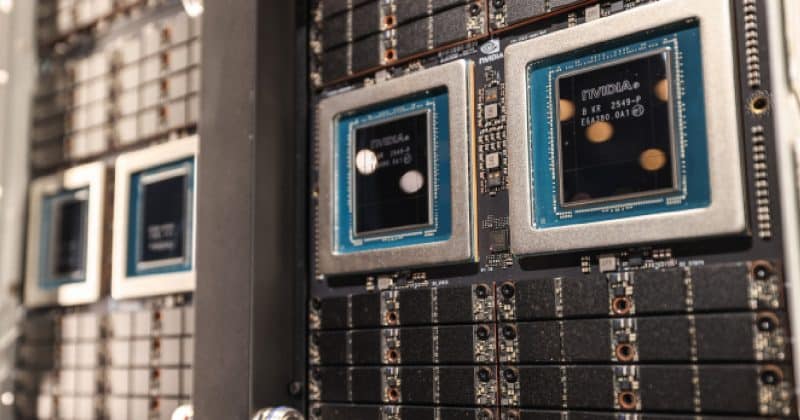
What makes South Korea’s approach distinct is its focus on memory rather than logic chips. HBM in particular has become the bottleneck product in AI infrastructure, with demand consistently outstripping supply as hyperscalers build out massive GPU clusters.
SK Hynix has been the primary supplier of HBM chips to Nvidia, giving it an outsized role in the AI supply chain. Samsung has been working to close the gap. Both companies expanding simultaneously suggests they see AI-driven demand as durable enough to absorb the additional capacity.
What this means for investors
For semiconductor equipment investors, the near-term thesis is clear. Two new fabs of this scale represent a multi-year revenue pipeline for companies that manufacture the precision tools required for chip production. Lam Research, ASML, and Tokyo Electron are the most direct beneficiaries, but the supply chain runs deep, including materials companies, gas suppliers, and cleanroom specialists.
The slight decline in Samsung and SK Hynix shares on announcement day suggests at least some investors are pricing in oversupply risk. South Korea’s semiconductor industry also sits at the intersection of US-China trade tensions, and any escalation in export controls or tariff regimes could complicate the supply chain dynamics these investments are built on.
Disclosure: This article was edited by Editorial Team. For more information on how we create and review content, see our Editorial Policy.










 English (US) ·