
 1 hour ago
1
1 hour ago
1
The three companies that collectively manufacture the vast majority of the world’s DRAM chips are now defendants in a federal antitrust lawsuit alleging they coordinated supply cuts to jack up prices. If that sounds familiar, it should. Samsung and SK Hynix have been down this road before.
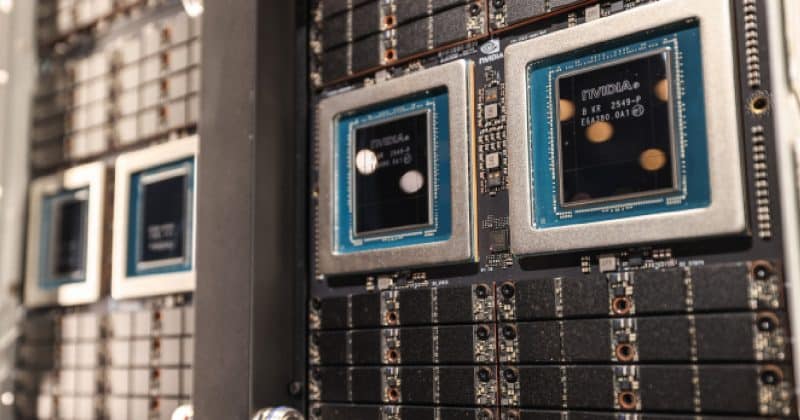
A class-action complaint filed on June 25 in the US District Court for the Northern District of California accuses Samsung Electronics, SK Hynix, and Micron Technology of colluding since late 2022 to suppress production of commodity DRAM, specifically DDR3 and DDR4 modules, while redirecting manufacturing capacity toward high-bandwidth memory (HBM) chips designed for AI workloads. The seventeen plaintiffs, a mix of individuals and small businesses, allege this coordinated pivot inflated DRAM prices by approximately 700% over four years.
The alleged playbook
The complaint invokes Section 1 of the Sherman Act alongside various state antitrust laws, characterizing the defendants’ behavior as oligopolistic coordination. The core allegation is that all three manufacturers simultaneously cut production of conventional DRAM at a time when demand for those chips was actually rising, instead shifting capacity to HBM chips. A 700% price increase over four years is a striking number. For context, that would mean a DRAM module that cost $10 in late 2022 would run roughly $80 today.
History rhymes, loudly
The DRAM industry has a documented history of price-fixing. In the early 2000s, the US Department of Justice investigated nearly identical allegations against major DRAM manufacturers. That investigation ended with guilty pleas. SK Hynix paid a $185 million penalty. Samsung also pleaded guilty and paid substantial fines. Several executives faced criminal charges. The early 2000s case established that DRAM manufacturers had coordinated pricing through direct communications, sharing production data and agreeing to output levels that kept prices artificially elevated.
The case has been assigned to Judge Noel Wise. As of early July, none of the three defendants have filed responses, and no trial date has been set. The allegations remain exactly that: allegations. No company has made any admissions regarding the claims.
What this means for hardware markets and crypto mining
DRAM is a fundamental component in virtually every computing device, from smartphones to servers to cryptocurrency mining rigs. For the crypto industry specifically, mining operations, validator infrastructure, and the data centers that support DeFi protocols and blockchain networks all require substantial memory. Higher DRAM costs translate directly into higher capital expenditures for anyone running compute-intensive operations.
The plaintiffs don’t need to prove the pivot to HBM was irrational. They need to prove it was coordinated. Three companies independently deciding to chase higher margins is capitalism. Three companies agreeing to chase higher margins together is a Sherman Act violation.
If the lawsuit succeeds, treble damages under the Sherman Act, which allow courts to triple the actual damages suffered, could push any judgment into territory that meaningfully impacts the defendants’ balance sheets. Previous DRAM antitrust cases resulted in penalties in the hundreds of millions.
Disclosure: This article was edited by Editorial Team. For more information on how we create and review content, see our Editorial Policy.













 English (US) ·