
 2 hours ago
1
2 hours ago
1
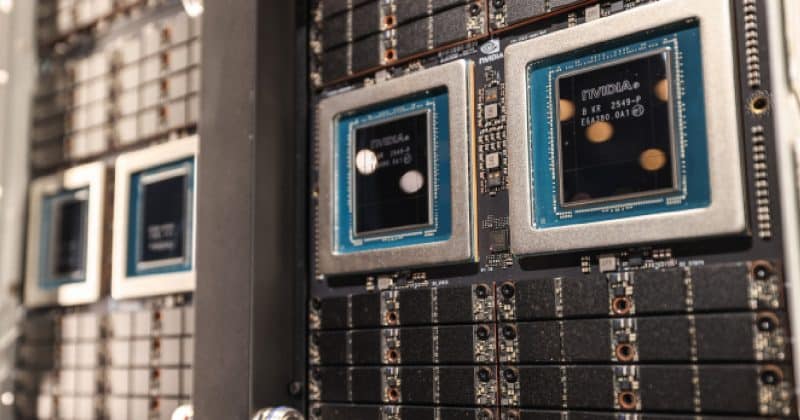
OpenAI has begun testing its first in-house AI chip, affectionately nicknamed Jalapeño, marking the company’s most concrete step yet toward building its own silicon. The chip is purpose-built for inference, the computationally intensive process of actually answering your ChatGPT questions, rather than training models from scratch.
Inside Project Nexus
The chip effort falls under a broader initiative called Project Nexus, a collaboration between OpenAI and Broadcom that was announced in October 2025. The partnership’s ambition is staggering: up to 10 gigawatts of AI accelerators over time.
The Jalapeño chip is being designed under the leadership of Richard Ho, a former Google engineer, and will be fabricated at TSMC using the advanced 3nm manufacturing process. It employs a systolic array architecture, a design well-suited for the repetitive matrix math that dominates inference workloads.
The first phase of Project Nexus targets 1.3 GW of compute power, which carries an $18 billion price tag. Broadcom’s financial backing reportedly hinges on Microsoft purchasing roughly 40% of the chip’s output, or OpenAI finding alternative buyers to fill that gap.
Timeline slippage and multi-vendor hedging
Production timelines have already shifted. Initial batches of the Jalapeño chip were originally planned for late 2026 but are now expected in 2027.
OpenAI is simultaneously partnering with Cerebras to bolster its low-latency inference capabilities. Nvidia and AMD remain in the picture as potential suppliers.
OpenAI began exploring custom chip development in 2024, motivated by the desire to embed model-specific optimizations directly into hardware.
What this means for investors
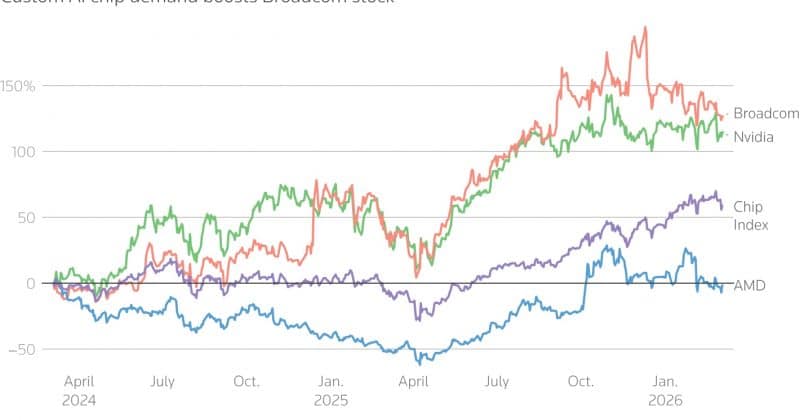
Broadcom’s role as a chip design partner positions it as a picks-and-shovels play in the custom silicon gold rush. For TSMC, this is simply more demand for its most advanced manufacturing nodes. The 3nm process is already in high demand from Apple and other major customers.
The risk worth watching is the financing structure. An $18 billion first phase with a 40% revenue dependency on a single customer is a concentrated bet. If Microsoft’s AI spending priorities shift, or if the chip underperforms Nvidia alternatives on cost-per-query metrics, the economics could unravel quickly.
Disclosure: This article was edited by Editorial Team. For more information on how we create and review content, see our Editorial Policy.












 English (US) ·