
 1 hour ago
1
1 hour ago
1
Erling Haaland just did to England what he’s been doing to Premier League defenders for years. He made it look inevitable. The Manchester City striker scored both goals in Norway’s 2-1 victory over England in the 2026 FIFA World Cup quarterfinal, ending England’s tournament run and cementing his status as the most dangerous striker on the planet.
The match, played at Hard Rock Stadium in Miami on July 11, took Norway to a place they haven’t been in 26 years: the semifinal of a major international tournament.
The match that moved markets
Haaland entered the quarterfinal with seven goals already in the tournament, a number that made him the competition’s leading scorer before kickoff. He added two more against England, bringing his total to nine and making the Golden Boot race look less like a competition and more like a coronation.
Norway’s path to this point was already remarkable. Their 2-1 round of 16 victory over Brazil, where Haaland also scored both goals, signaled that this wasn’t a fluke run.
England came in as favorites. Haaland himself acknowledged this before the match, noting the pressure that came with that tag.
The 2-1 result means England’s golden generation, led by captain Harry Kane, exits without a trophy yet again. The much-hyped individual battle between Haaland and Kane was settled decisively in the Norwegian’s favor.
Why crypto investors should care about World Cup upsets
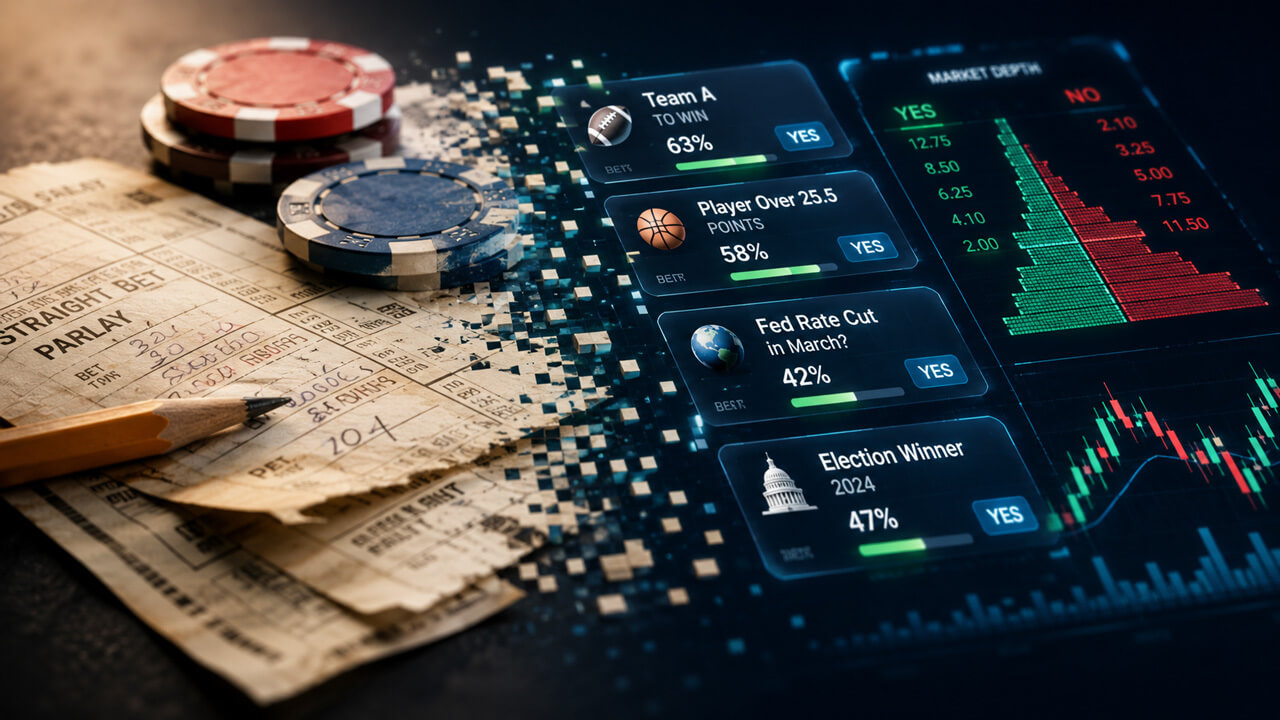
Blockchain-based sports betting platforms have grown substantially heading into the 2026 World Cup cycle. Prediction markets built on decentralized protocols allow users to wager on match outcomes, goal scorers, and tournament winners using crypto assets. When a heavy favorite like England gets eliminated, the settlement of those contracts creates significant volume.
Fan tokens, the digital assets that give holders voting rights and engagement perks with their favorite clubs and national teams, also respond to real-world results. Tokens associated with winning teams and star players tend to see increased trading activity after marquee performances.
Then there’s the NFT angle. Memorable World Cup moments have historically driven spikes in digital collectible minting and trading. Haaland’s brace against England in a quarterfinal is the kind of moment that gets immortalized on-chain, whether through official FIFA digital collectibles or third-party platforms.
The bigger picture for sports and blockchain
The 2026 World Cup is the first to be held across the US, Mexico, and Canada, placing it squarely in the most crypto-active markets on Earth. The US alone accounts for a disproportionate share of global crypto trading volume, and having marquee matches played in Miami, a city that literally renamed its arena after a crypto exchange (before that deal collapsed), adds a layer of irony that writes itself.
Prediction markets had England as clear favorites. Sportsbooks, both traditional and on-chain, had to pay out on a result that most models didn’t expect.
Disclosure: This article was edited by Editorial Team. For more information on how we create and review content, see our Editorial Policy.





 English (US) ·