
 1 hour ago
1
1 hour ago
1
Michael Burry, the investor who made a fortune predicting the 2008 housing crisis, is back with another contrarian thesis. This time he’s targeting the backbone of the AI boom: the GPUs powering it.
Burry has disclosed short positions across the AI hardware ecosystem, including Nvidia at $198.09, Tesla at $416.22, Caterpillar at $1,060.98, Applied Materials at $729.40, and the iShares Semiconductor ETF (SOXX) at $642.80.
The $176 billion accounting question
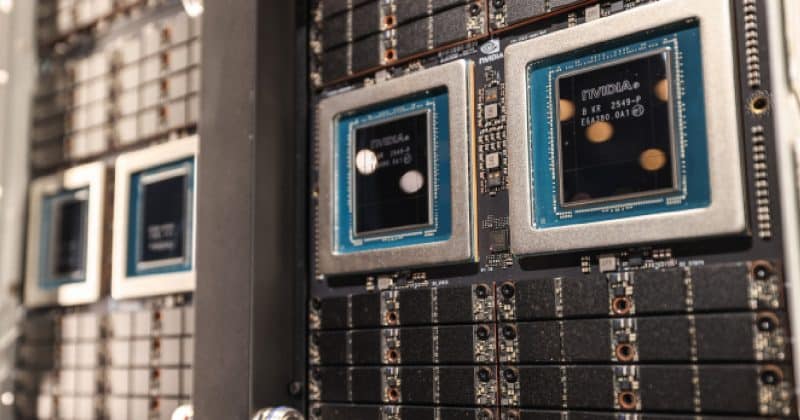
Nvidia’s GPUs have a realistic operational lifespan of roughly 2-3 years. Jensen Huang has acknowledged at GTC events that Nvidia’s product release cycle has accelerated to annual updates, meaning older chip architectures depreciate rapidly as new ones arrive.
The companies buying these GPUs are accounting for them as though they’ll last much longer. Microsoft extended its depreciation period for GPUs from 4 to 6 years. Meta has adopted a 5.5-year schedule for its GPU assets. Other hyperscalers, including Google, Amazon, and Oracle, are playing similar games with their depreciation timelines. That makes their annual expenses look smaller, and their profits look bigger.
Burry estimates this accounting mismatch results in approximately $176 billion in understated depreciation expenses from 2026 to 2028.
Burry has also flagged what he describes as “8-12 byzantine steps” in the financing structures surrounding AI-related GPU purchases, with the concern that these complex arrangements could be obscuring the true scale of Nvidia hardware commitments sitting off corporate balance sheets.
Why crypto investors should pay attention
Decentralized compute projects like Render, Akash, and io.net have explicitly pitched themselves as alternatives to centralized GPU clouds. Their investment thesis partly depends on sustained demand for GPU compute at premium prices. A world where hyperscalers suddenly need to write down GPU assets faster, or where GPU oversupply materializes from canceled orders, changes the economics for these protocols fundamentally.
The bear case and its limits
The counterargument is straightforward: companies like Microsoft, Google, and Meta are already generating tens of billions in AI-driven revenue through cloud services, advertising optimization, and enterprise tools. The depreciation schedule might be aggressive, but it’s not necessarily fictional if these chips remain productive in inference workloads even after they’re no longer competitive for cutting-edge training.
Still, the $176 billion figure is hard to dismiss. If even a fraction of that understated depreciation gets recognized earlier than planned, whether through accounting standard changes, auditor pressure, or simply the physical failure of overworked GPUs, the earnings revisions would be significant. Tech companies trading at premium multiples have very little margin for earnings disappointments.
The positions Burry has taken, spanning chips, equipment manufacturers, and even Tesla, suggest he’s not betting against a single company. He’s betting against a capital expenditure cycle that he believes has outrun its economic logic.
Disclosure: This article was edited by Editorial Team. For more information on how we create and review content, see our Editorial Policy.














 English (US) ·