
 1 hour ago
1
1 hour ago
1
The memory chip sector just had the kind of week that makes portfolio managers reach for the antacids. Micron and Sandisk each dropped more than 6%, Western Digital fell over 7%, and the Philadelphia Semiconductor Index (SOXX) posted a 7.9% weekly decline, its worst performance since April 2025.
The culprit? Growing fears that surging prices for high-bandwidth memory, the specialized chips feeding the AI boom, are starting to squeeze the margins of downstream tech companies that actually have to buy the stuff. Apple’s name came up more than once in that conversation.
From trillion-dollar highs to a rough landing
Micron’s stock surged over 300% year-to-date before this week’s selloff. Sandisk posted gains in the hundreds of percent. Both SK Hynix and Micron crossed the $1 trillion market cap threshold back in May, powered almost entirely by insatiable AI-driven memory demand.
For stretches of this year, memory stocks were actually outperforming Nvidia. Intraday swings on the SOXX reached as high as 3.8% during the week of June 26-27.
The HBM problem nobody saw coming
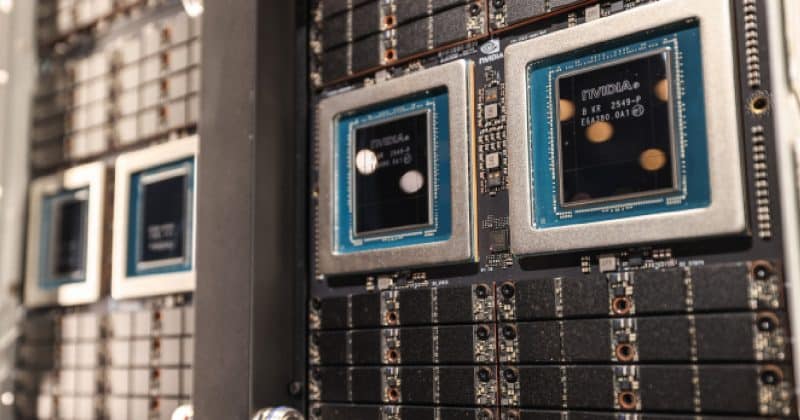
Here’s the thing about high-bandwidth memory. It’s the critical component that makes AI accelerators work at scale. Without HBM, large language models and other AI workloads can’t move data fast enough to be useful. That scarcity has been a goldmine for memory producers.
Apple, which consumes enormous volumes of memory across its product lines, appears to be at the center of this concern. If the world’s most valuable consumer tech company starts flagging memory costs as a headwind, the market tends to listen.
Massive capex bets add another layer of uncertainty
Samsung Electronics and SK Hynix announced combined investments of approximately 800 trillion won, roughly $519 billion, for new fabrication facilities. That is not a typo. Half a trillion dollars in new chip manufacturing capacity.
On one hand, this signals deep confidence in long-term AI memory demand. On the other hand, massive capacity buildouts have historically been the precursor to oversupply in the semiconductor industry.
What this means for investors
Margin compression at major tech buyers is probably the most immediate concern. If companies like Apple begin adjusting their product strategies or supplier negotiations in response to elevated memory prices, the revenue tailwinds that propelled Micron and SK Hynix to trillion-dollar valuations could start to moderate.
Samsung, historically the world’s largest memory producer, has been playing catch-up to SK Hynix in the HBM space. Samsung’s aggressive capex plans suggest it intends to close that gap, which could intensify competition and compress margins even if total demand remains strong.
For investors already holding memory positions, this week’s volatility is a reminder that position sizing matters in cyclical sectors. A stock that’s up 300% can give back 30% in a few trading sessions without violating any technical patterns. The SOXX’s 7.9% weekly decline, while sharp, barely registers as a correction given the magnitude of the prior rally.
Disclosure: This article was edited by Editorial Team. For more information on how we create and review content, see our Editorial Policy.












 English (US) ·