
 1 hour ago
2
1 hour ago
2
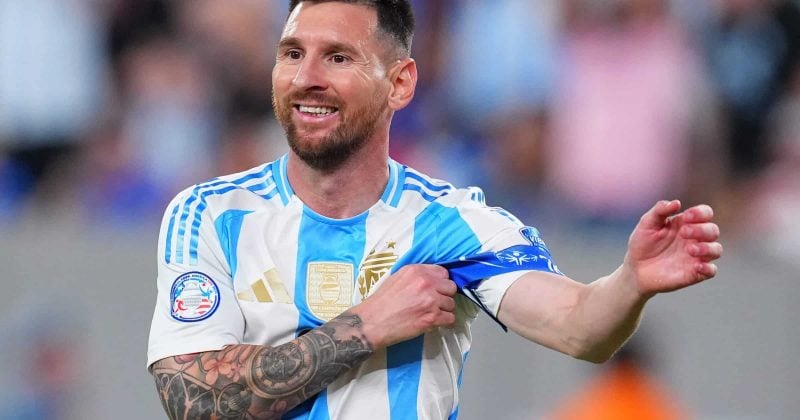
Lionel Messi, the man who has spent two decades making the impossible look routine, just did it again. On June 22, 2026, Messi scored his 17th FIFA World Cup goal during Argentina’s match against Austria in Dallas, Texas, breaking the all-time record previously held by Germany’s Miroslav Klose at 16.
He’s 38 years old. He’s playing in his sixth World Cup. And he’s now, definitively, the most prolific goal-scorer in the history of the tournament.
The path to 17
The record-breaking goal came in the 39th minute against Austria. What makes it even more Messi-like is that he had missed a penalty earlier in the same match. Messi just shrugged it off and scored from open play instead.
He had tied Klose’s record just six days earlier, on June 16, when he put three past Algeria in Argentina’s opening Group J fixture. That 3-0 win featured Messi’s first-ever World Cup hat-trick, bringing his tournament tally to 16 and setting the stage for the record-breaker against Austria.
Messi’s 17 World Cup goals are spread across five different tournaments. One goal in 2006 as a teenager. Four in 2014 when Argentina reached the final. A quieter single goal in 2018. Then the explosion: seven goals during the 2022 World Cup in Qatar, the tournament where he finally lifted the trophy. And now four goals (and counting) in 2026.
Klose scored his 16 across four World Cups between 2002 and 2014. Messi has now done it across five, spanning two full decades of elite international football.
The 2026 tournament also makes Messi the first male player to appear in six different World Cups. His debut came in Germany in 2006 when he was 18.
What this means for $ARG and the fan token market
Fan tokens sit somewhere between a loyalty program and a speculative asset, giving holders voting rights on minor club or national team decisions while also trading on open markets.
Trading volume for $ARG saw notable surges aligned with Messi’s performances during the 2026 World Cup. The hat-trick against Algeria on June 16 and the record-breaker against Austria on June 22 both coincided with spikes in activity.
The 2022 World Cup showed a similar pattern, with fan tokens across multiple national teams seeing elevated volumes during the tournament before settling back down.
What investors should watch
Fan tokens are fundamentally tied to sentiment, not revenue or protocol fees. The value proposition rests almost entirely on fan engagement and speculative interest, which makes these tokens significantly more volatile and harder to value than a DeFi protocol with measurable cash flows.
Messi is 38. When the greatest player in history eventually steps away from international football, the single biggest demand driver for $ARG goes with him.
Chiliz remains the dominant platform for fan tokens, but the broader concept of performance-linked digital assets is attracting attention from other blockchain projects.
Disclosure: This article was edited by Editorial Team. For more information on how we create and review content, see our Editorial Policy.











 English (US) ·