
 1 hour ago
1
1 hour ago
1
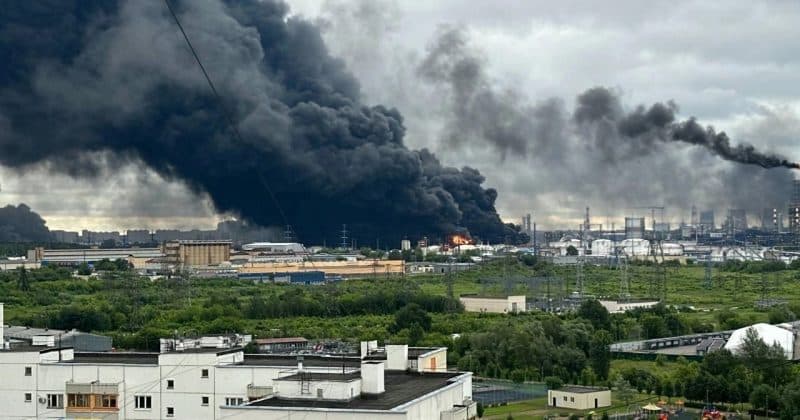
Kuwait’s fire services brought a blaze under control on Tuesday after Iranian missile strikes hit at least one site in the country, with no injuries reported. The announcement came from Kuwait’s state news agency, KUNA, marking the latest escalation in a conflict that has been grinding through the Gulf region since early 2026.
What actually happened
The July 14 incident is part of a sustained Iranian campaign that has been targeting U.S.-aligned Gulf states throughout 2026. Iranian forces have struck Ali Al Salem Air Base in Kuwait, sites in Bahrain, and locations in Jordan as part of what appears to be a coordinated effort to pressure American military and economic interests across the region.
Kuwait’s Mina Al-Ahmadi refinery was hit by drone strikes on March 19, 2026, resulting in minor fires at that time. Kuwait International Airport was also identified as a target in the July wave of attacks, raising the stakes beyond energy infrastructure and into civilian logistics.
Oil markets respond, fast
Brent crude surged 9.6% in direct response to the renewed Iranian aggression.
If Iranian strikes continue targeting refinery infrastructure specifically, the supply disruption narrative becomes harder to shake. Mina Al-Ahmadi processes a substantial share of Kuwait’s crude output, and repeated hits, even minor ones, create compounding uncertainty that tends to keep risk premiums elevated longer than a single incident would.
The crypto angle: hedges and historical precedent
Iran has previously accepted Bitcoin for toll payments, a workaround born from years of living under international sanctions that made dollar-denominated transactions difficult or impossible. One estimate circulating in the market suggests that Iranian-linked Bitcoin demand, tied partly to toll payment mechanisms and sanctions evasion, could represent annualized demand of roughly $7.7 billion.
Several Gulf states have been accelerating their digital asset frameworks, partly as a hedge against the very kind of financial volatility that conflict creates. If the region’s energy revenue flows become less predictable, the argument for sovereign wealth funds holding alternative reserve assets, including Bitcoin, gains an institutional audience it might not have had in a quieter year.
Disclosure: This article was edited by Editorial Team. For more information on how we create and review content, see our Editorial Policy.











 English (US) ·