
 2 hours ago
2
2 hours ago
2
The information provided in this article is for informational purposes only and does not constitute financial advice. Cryptocurrency investments carry a high degree of risk. Always conduct your own research.
Tron founder Justin Sun filed a lawsuit against World Liberty Financial, alleging his $WLFI tokens were wrongfully frozen.
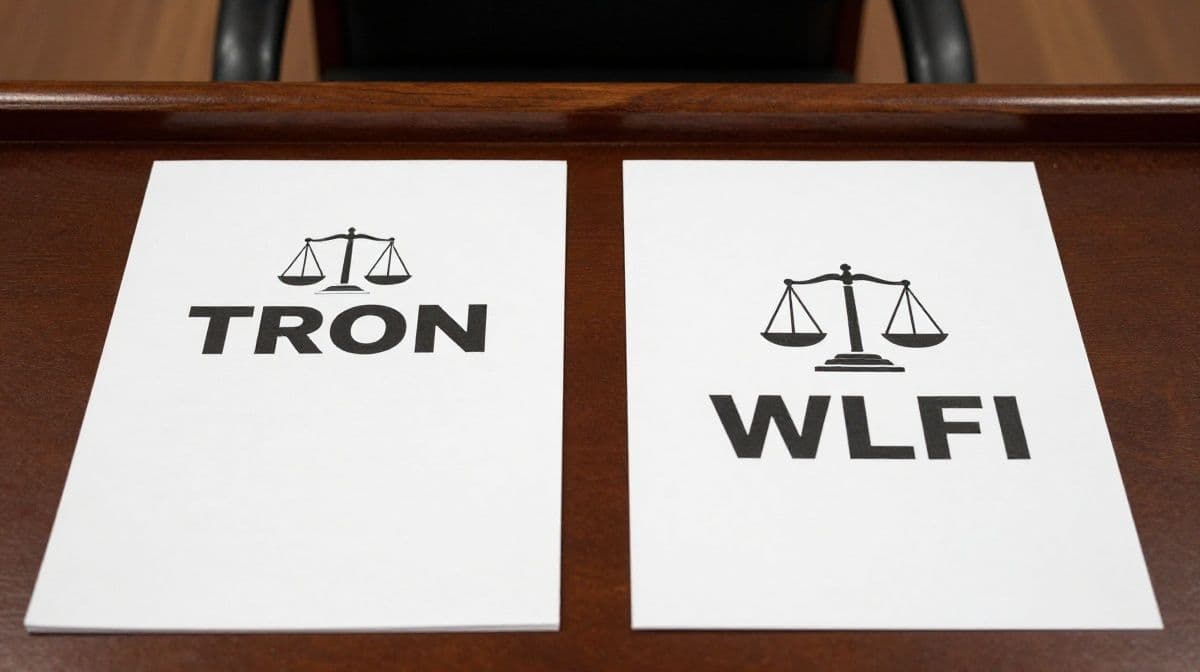
In a dramatic escalation of tensions within the decentralized finance (DeFi) space, Justin Sun, the founder of TRON and a high-profile crypto entrepreneur, has officially filed a lawsuit against World Liberty Financial (WLF). The legal action, filed in a California federal court, marks a significant rift between Sun and the crypto project closely associated with U.S. President Donald Trump and his family.
Sun alleges that the project team has acted in bad faith by freezing his holdings of the $WLFI token, stripping him of governance rights, and threatening a permanent "burn" of his assets. Despite the legal battle, Sun emphasized his continued support for the Trump administration’s broader pro-crypto stance, clarifying that his dispute lies solely with the individuals managing the WLF protocol.
Justin Sun vs. World Liberty Financial: What Happened?
The core of the dispute centers on Sun’s status as a major early investor in World Liberty Financial. According to Sun’s public statement on X, certain members of the WLF team implemented a "blacklist" or freeze function within the WLFI token smart contracts.
Sun claims this was done without justification, effectively locking his tokens and preventing him from participating in critical governance votes. The situation reached a breaking point following a new governance proposal introduced on April 15, 2026, which Sun argues is detrimental to the community and early backers.
The April 15 Governance Proposal
The proposal in question introduces a "tax on commitment" and a revised vesting schedule:
- Mandatory Burn: Requires 10% of all advisor tokens to be permanently destroyed (burned).
- Vesting Cliff: Imposes a two-year cliff followed by a two-year vesting schedule for early purchaser tokens.
- Indefinite Lock: Token holders who do not "affirmatively accept" these new terms risk having their tokens locked indefinitely.
Sun argues that because his tokens are currently frozen, he is being denied the right to vote against these changes, which he views as a violation of the principles of decentralization and transparency.
 Tax season is right around the corner. Did you pick a crypto tax tool yet? Check out our comparison
Legal Grounds and Claims
The lawsuit filed in California seeks to restore Sun’s rights as a token holder. Sun maintains that he is simply asking to be treated with the same fairness as any other early investor.
Critics of World Liberty Financial have previously raised concerns about the project's centralized control. Reports from The Guardian suggest that the protocol may contain "backdoor" functions allowing administrators to freeze accounts—a feature Sun claims was used specifically to target him after he attempted to move significant amounts of liquidity.
Impact on the Crypto Market
The legal battle comes at a sensitive time for World Liberty Financial. The project, which launched with the aim of promoting a USD-pegged stablecoin and a decentralized lending platform, has faced scrutiny over its tokenomics.
If Sun’s lawsuit succeeds, it could set a precedent for investor rights in DeFi projects that market themselves as decentralized but retain significant administrative overrides. Traders and investors are closely watching the WLFI price and the outcome of the April 15 proposal, as the locking of 62.2 billion tokens could significantly impact market supply.










 English (US) ·