
 2 hours ago
4
2 hours ago
4
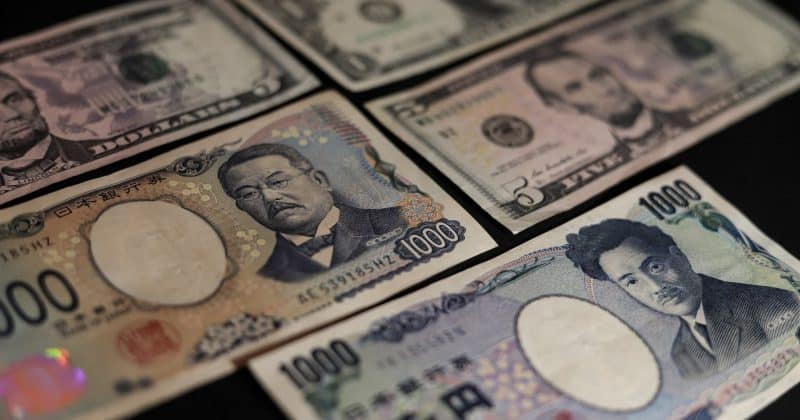
Japan’s Finance Minister Satsuki Katayama has put currency markets on notice: the government will respond to foreign exchange movements as needed. The statement lands as the yen trades at roughly 161.7 per dollar, flirting with levels not seen in four decades.
This isn’t empty posturing. Japan just wrapped up a record-breaking ¥11.73 trillion ($73B) intervention campaign between April 28 and May 27, 2026.
What’s happening and why it matters
The core problem is straightforward: interest rate differentials between the US and Japan remain stubbornly wide. Money flows to where it earns more, and right now that’s not Japan. The result is persistent selling pressure on the yen.
Katayama, who became Japan’s first female finance minister when she took the role in October 2025, has been carefully calibrating her public messaging. Earlier warnings carried sharper edges. Now the tone has settled into something more routine, a kind of sustained vigilance rather than crisis-mode rhetoric. If speculators know exactly where the line is, they’ll push right up to it.
Prime Minister Sanae Takaichi has backed this approach, emphasizing that a stronger underlying economy is the real long-term defense for the yen. She’s also stressed coordination with US officials, which matters because unilateral currency intervention by a major trading partner tends to ruffle feathers in Washington.
The carry trade and crypto contagion risk
A report from June 17, 2026, flagged a potential “crypto contagion risk” tied directly to yen weakness and carry trade dynamics. Speculative capital that flows through carry trades doesn’t just sit in government bonds — it finds its way into risk assets, including crypto. When those positions get unwound under pressure, selling cascades across asset classes.
We saw a version of this play out during Japan’s last significant currency intervention in 2024, when sudden yen strengthening sent ripples through global markets as leveraged positions got liquidated.
The yen is currently hovering around psychologically important levels between 160 and 162 against the dollar.
What this means for investors
A weak yen makes imports more expensive, particularly energy and food. That feeds into inflation, which squeezes consumer spending and complicates the Bank of Japan’s already delicate policy balancing act. If inflation accelerates further, the BOJ faces pressure to raise rates, which would narrow the interest rate differential with the US and potentially strengthen the yen organically, but at the cost of economic growth.
Japan’s record intervention spending from April to May 2026 bought time, but it didn’t solve the underlying problem. As long as US-Japan rate differentials persist, the pressure on the yen will remain.
Disclosure: This article was edited by Editorial Team. For more information on how we create and review content, see our Editorial Policy.














 English (US) ·