
 1 hour ago
2
1 hour ago
2
The Supreme Court told the Trump administration its sweeping tariff regime was unconstitutional. The administration’s response, essentially: we’ll find another way.
On February 20, 2026, the Court ruled against the use of the International Emergency Economic Powers Act (IEEPA) as the legal foundation for Trump’s global tariffs. That decision knocked out roughly 70% of the tariffs the administration had imposed worldwide. And in the resulting power vacuum, one person has emerged with significantly more influence over the direction of US trade policy: US Trade Representative Jamieson Greer.
The legal pivot
Within two days of the ruling, Greer laid out the new strategy publicly.
“The legal tool to implement it, that might change, but the policy hasn’t changed.”
That February 22, 2026, statement captures the administration’s posture perfectly.
The administration moved quickly to enact temporary 10% global tariffs under Section 122 of the Trade Act of 1974. Those tariffs are set to expire in July 2026. As of May 2026, appeals related to the original IEEPA tariffs remain ongoing.
Why Greer matters now
Greer was confirmed as the 20th US Trade Representative on February 27, 2025. He previously served as Chief of Staff to Robert Lighthizer, the architect of Trump’s first-term trade war with China, and was instrumental in implementing tariffs on China and negotiating the Phase One trade agreement and the US-Mexico-Canada Agreement (USMCA).
Greer has signaled that China remains the top target. He’s indicated that tariff increases on Chinese goods could come through existing trade deals, new investigations, or alternative mechanisms like service fees and quotas.
Before the ruling, the White House could unilaterally impose tariffs by declaring economic emergencies, concentrating authority in the Oval Office. Now, with IEEPA off the table, the process runs more directly through the trade representative’s office, which handles the Section 122 authority and oversees trade investigations.
What this means for crypto and tech investors
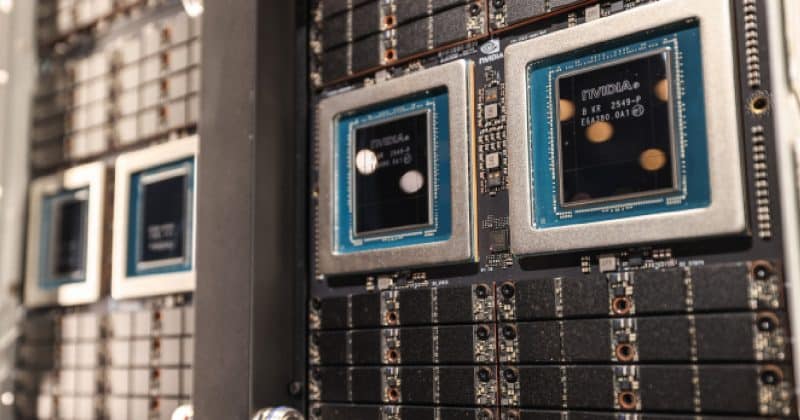
China remains home to a significant portion of cryptocurrency mining hardware manufacturing. If Greer follows through on escalating tariffs against Chinese imports, whether through new investigations or alternative trade tools, the cost of mining equipment could rise substantially.
The temporary 10% global tariff under Section 122 expires in July 2026. That deadline creates a binary outcome for markets: either the administration finds a new legal mechanism to extend or increase tariffs, or the barriers come down.
Disclosure: This article was edited by Editorial Team. For more information on how we create and review content, see our Editorial Policy.








 English (US) ·