
 1 month ago
40
1 month ago
40
Iran’s Foreign Ministry declared it will continue pursuing justice against American and Israeli officials following the funeral of Ayatollah Ali Khamenei, the supreme leader killed during US-Israeli airstrikes on February 28, 2026. His death, confirmed by Iranian state media on March 1, represents one of the most consequential geopolitical events in decades, and its ripple effects have reached deep into crypto markets.
Massive funeral processions commenced on July 3-4, with ceremonies planned across Tehran, Qom, and Mashhad. Burial is scheduled for July 9. Estimates suggest up to 20 million mourners participated in memorial events across Iran’s major cities and parts of Iraq.
A leadership vacuum, quickly filled
Khamenei was 86 years old at the time of his death. His killing triggered an immediate leadership transition inside Iran, beginning with the formation of an Interim Leadership Council. That council has since given way to a more permanent arrangement: Mojtaba Khamenei, the late supreme leader’s son, was appointed as the new Supreme Leader.
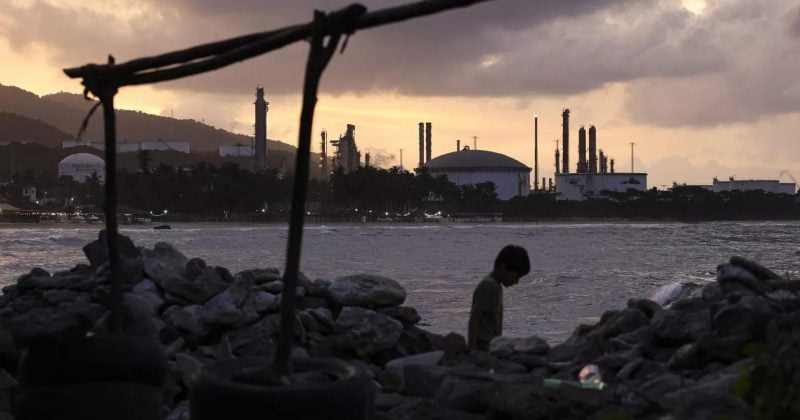
Iranian officials have issued warnings against foreign military actions in the Strait of Hormuz during the funeral period. Roughly 20% of the world’s oil passes through that chokepoint.
Washington targets Iran’s crypto lifeline
On June 2, 2026, the US Treasury sanctioned Nobitex, Iran’s largest digital asset exchange. The reasoning: Nobitex allegedly processed over 50% of Iranian digital asset flows in 2025 and maintained ties to the Islamic Revolutionary Guard Corps (IRGC).
Prediction markets and Bitcoin volatility
Bitcoin experienced notable volatility in the aftermath of the airstrikes and the confirmation of his death. One prediction market tracking the events surrounding Khamenei’s death attracted $45 million in volume before resolving at 100% upon confirmation of his passing.
What this means for investors
The sanctions against Nobitex could have chilling effects on exchanges operating in gray-zone jurisdictions. Compliance costs across the industry could rise as exchanges scramble to prove they’re not facilitating Iranian flows. Decentralized exchanges and privacy-focused protocols may see increased usage from actors trying to circumvent restrictions, which in turn invites more regulatory scrutiny.
Disclosure: This article was edited by Editorial Team. For more information on how we create and review content, see our Editorial Policy.













 English (US) ·