
 1 hour ago
2
1 hour ago
2
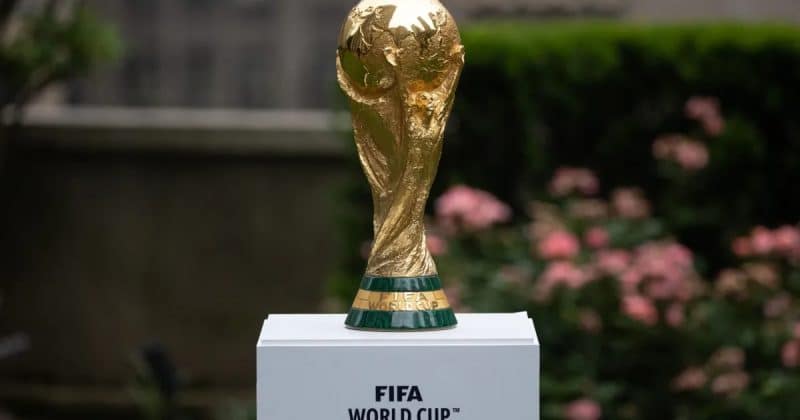
Four World Cups is a long time. Long enough to go from fresh-faced newcomer to grizzled veteran, long enough to watch entire generations of teammates come and go. Alireza Jahanbakhsh and Ehsan Hajsafi have now done what no Iranian footballer has ever managed: they’ve suited up for Team Melli across four separate FIFA World Cups.
The pair first appeared together on football’s biggest stage in 2014, returned in 2018 and 2022, and are now part of Iran’s 26-player squad for the 2026 tournament in North America. That kind of longevity in international football is rare anywhere. In Iranian football, it’s unprecedented.
A record built on durability
Jahanbakhsh, a winger born in 1993 and currently plying his trade at Belgian club Dender, has racked up over 99 international caps and 17 goals for Iran heading into this tournament. He’s served as co-captain of the squad, a leadership role that reflects how central he’s become to the national team’s identity over the past decade-plus.
Hajsafi, a defender with deep roots at Iranian club Sepahan, brings even more experience to the table. He’s approaching Iran’s all-time appearance record, a marker of just how consistently he’s been selected across multiple coaching regimes and tactical systems.
Iran’s head coach Amir Ghalenoei announced the 26-man squad in early June 2026. The inclusion of both veterans was never really in doubt. In a sport that increasingly skews younger, their presence sends a clear signal about the value Ghalenoei places on experience and dressing-room stability.
Arriving in Tijuana with a message
The team touched down in Tijuana, Mexico, around June 7-8 to begin final preparations for their group-stage matches. Jahanbakhsh was vocal about the warm reception the squad received from fans, and he used the moment to reiterate a broader point: Team Melli represents all Iranians, regardless of background or political affiliation.
Both players emphasized team unity and a message of peace heading into the tournament.
Hajsafi noted that visa processing delays affected members of the coaching staff ahead of matches scheduled in the US, one of three co-hosts alongside Canada and Mexico.
What this milestone means for Iranian football
Iran returned to the World Cup stage in 1998 after a 20-year absence, and each subsequent qualification has been treated as a moment of national pride. Jahanbakhsh and Hajsafi have now been part of that story for over a decade.
The 2026 World Cup’s expanded format, with 48 teams instead of the previous 32, has changed the competitive landscape. Jahanbakhsh’s role as co-captain formalizes what was already obvious: these two are the emotional backbone of the group.
The record they’ve set, four World Cup appearances for Iran, requires not just talent but durability, consistent national team selection across multiple coaching staffs, and the good fortune of Iran qualifying for four consecutive tournaments.
Disclosure: This article was edited by Editorial Team. For more information on how we create and review content, see our Editorial Policy.








 English (US) ·