
 1 hour ago
1
1 hour ago
1
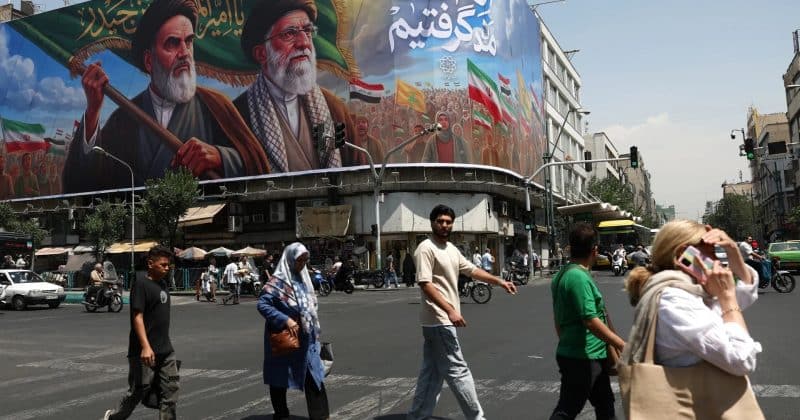
Hundreds of thousands of mourners flooded the streets of Tehran on Sunday, chanting “Death to America” and “Death to Israel” during funeral prayers for Ayatollah Ali Khamenei. The 86-year-old supreme leader was killed in joint US-Israeli airstrikes on February 28, and the reverberations are still shaking everything from oil futures to Bitcoin order books.
The crypto flight from Tehran
Nobitex, Iran’s largest cryptocurrency exchange, reported a 700% spike in outflows immediately following the February 28 strike. That translates to nearly $3 million in withdrawals on a single day, an extraordinary figure for a platform operating under some of the world’s heaviest sanctions regimes.
The new round of US sanctions has specifically targeted Iranian crypto infrastructure, suggesting Washington is well aware that digital assets have become a critical financial lifeline for ordinary Iranians.
Bitcoin’s geopolitical stress test
Bitcoin initially dropped to around $63,000 in the hours following the assassination before recovering to approximately $68,000. That $5,000 swing, roughly 8%, is the kind of volatility that reminds everyone Bitcoin isn’t digital gold in the way a bar of metal sitting in a vault is gold.
Prediction markets also lit up. Trading volume on platforms tracking Khamenei-related outcomes reached $45 million prior to the official confirmation of his death.
The funeral and what comes next
Iran’s state funeral processions for Khamenei are scheduled from July 4 through July 9, with expected attendance of up to 10 million people across the country. Some hardliners at Sunday’s ceremony openly called for the assassination of US President Donald Trump.
The February 28 strike killed not just Khamenei but several other top officials, decapitating a significant portion of Iran’s leadership structure.
What this means for crypto investors
The $3 million in single-day Nobitex outflows is a rounding error in global crypto terms. But it’s a proof of concept. If sanctions continue to tighten, and if the conflict escalates further, the demand for censorship-resistant money in the region will only grow.
The $45 million in prediction market volume around this single event suggests that crypto-native financial products are increasingly being used as real-time gauges for geopolitical risk, competing with traditional instruments like oil futures and credit default swaps.
Disclosure: This article was edited by Editorial Team. For more information on how we create and review content, see our Editorial Policy.












 English (US) ·