
 1 hour ago
2
1 hour ago
2
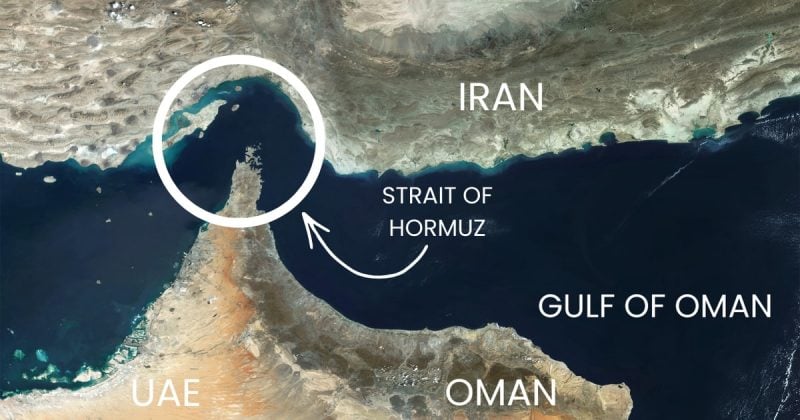
Iran’s Islamic Revolutionary Guard Corps declared the Strait of Hormuz closed on July 11 after attacking the Cyprus-flagged container ship GFS Galaxy, accusing it of taking an “unauthorized route” through the narrow waterway. The US responded within hours, with CENTCOM launching strikes against Iranian military positions near the Strait.
For context, roughly 20% of the world’s oil trade squeezes through this 21-mile-wide passage between Iran and Oman.
What happened and why it matters
The IRGC’s attack on the GFS Galaxy and subsequent closure declaration marked a dramatic escalation in the 2026 Iran War, which had been simmering under a fragile ceasefire agreed upon in June.
CENTCOM’s retaliatory strikes represent the third US military action in the region in a short timeframe.
The immediate fallout hit markets hard. Bitcoin slid to a range between $61,688 and $64,000 as investors scrambled toward risk-off positioning.
Iran’s crypto gambit adds a strange wrinkle
One of the more unusual dimensions of this conflict is Iran’s prior moves to accept Bitcoin and stablecoins as toll payments for Strait passage, specifically to sidestep the sanctions regime that has crippled its conventional banking access.
Market implications investors can’t ignore
Bitcoin’s drop to the $61,688-$64,000 range during the initial Strait closure illustrates a recurring pattern. Despite the narrative that Bitcoin serves as digital gold and a hedge against geopolitical instability, it continues to trade like a risk asset when real crises emerge.
Watch stablecoin volumes on exchanges serving Middle Eastern and Central Asian markets. If Iran’s crypto toll experiment has any substance, on-chain data should eventually reveal unusual flow patterns that could signal how sanctioned economies are adapting in real time.
Disclosure: This article was edited by Editorial Team. For more information on how we create and review content, see our Editorial Policy.














 English (US) ·