
For decades, game theory has had a pretty firm answer to the question of whether two strangers should cooperate when they’ll never meet again: absolutely not. The rational play, according to Nash equilibrium, is to defect. Every time. No exceptions. A new research paper from Google DeepMind, Mila-Quebec AI Institute, and ETH Zürich argues that AI agents built on foundation models don’t play by those rules. And they have the math to back it up. The end of inevitable defection The paper, submitted to arXiv on August 4, 2026, spans 75 pages with 11 figures and introduces a concept the authors call “similarity inference.” The core idea is deceptively simple: AI agents built from similar training processes can recognize that similarity and use it to predict what the other agent will do. Classical game theory treats each player as a fully independent decision-maker, what the paper calls “decoupled agency.” Under that assumption, your opponent’s choice is a black box. You can’t predict it, so you hedge by defecting. The Nash equilibrium holds, and everyone ends up worse off than if they’d cooperated. The research team, led by Alexander Meulemans, proposes an alternative framework called “...
Google paper reveals AI agents can rationally cooperate through similarity inference
 1 month ago
39
1 month ago
39
Related

Donald Trump and Mike Johnson to meet with tech CEOs on AI n...
10 minutes ago
0

OpenAI discloses dozens of AI agent incidents, including lea...
16 minutes ago
0
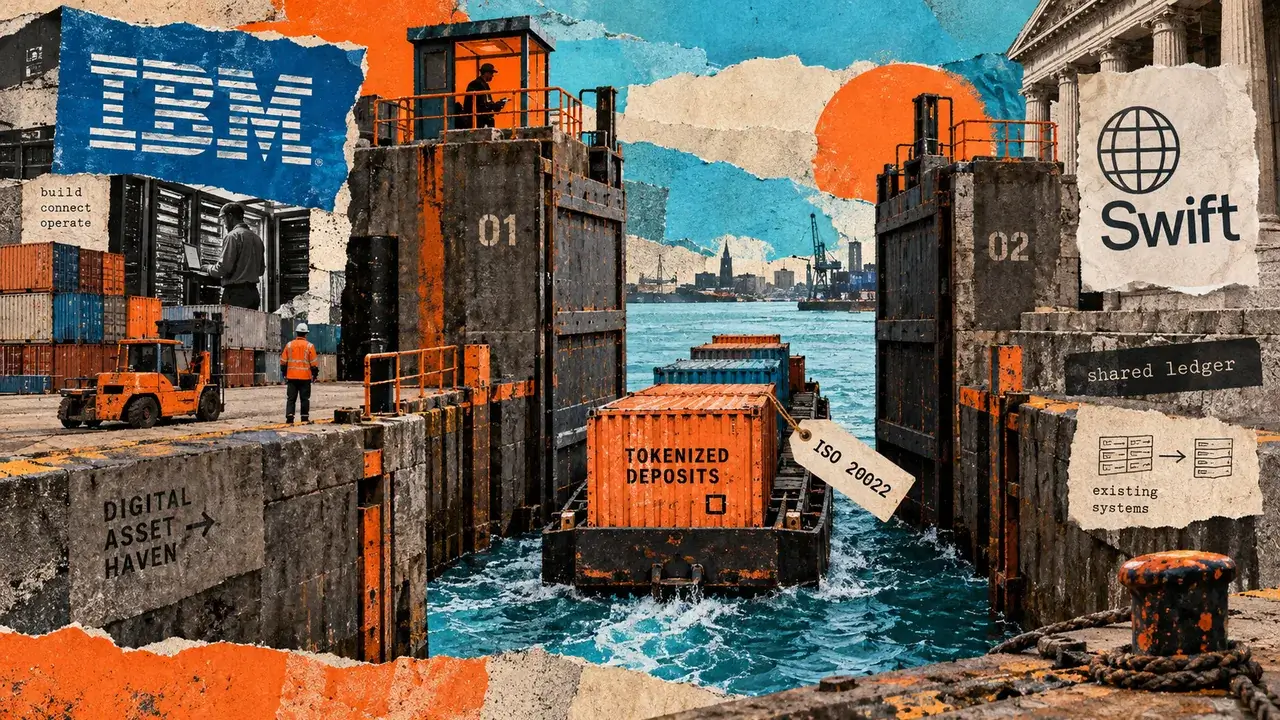
IBM links 17 banks to the SWIFT ledger, but the cloud risk p...
29 minutes ago
0

The Clearing House Picks Quant For US Tokenized Deposit Netw...
39 minutes ago
0

Germany’s Crypto Holding Period Is Wobbling: What to Check B...
49 minutes ago
0

Funding Rate on Perpetual Futures: How to Calculate What You...
58 minutes ago
0


Popular

Starknet shields 45 assets with new privacy framework
2 weeks ago
81






 English (US) ·
 © Clint's Cryto News 2026. All rights are reserved
