
 1 hour ago
2
1 hour ago
2
France, the United Kingdom, and Oman have struck a deal to jointly restore safe passage through the Strait of Hormuz, the narrow waterway that functions as the global economy’s most important bottleneck. A joint statement from UK and French leadership on Friday called the strait “a vital artery for the global economy” and framed the restoration of safe transit as “a matter of global concern.”
Here’s why crypto traders should care about a shipping lane on the other side of the world: the Strait of Hormuz handles roughly 20% of global oil and liquefied natural gas shipments. When tankers can’t move freely through it, oil prices spike, inflation expectations climb, and risk assets, including Bitcoin and Ethereum, tend to get punished.
What the deal actually involves
The agreement brings together French President Emmanuel Macron, UK Prime Minister Keir Starmer, and Oman’s Sultan Haitham bin Tarik in a coordinated naval mission to protect commercial vessels transiting the strait. The effort reportedly includes multinational naval planning discussions, demining operations, and escort missions for merchant ships.
Up to 2,000 vessels are reportedly awaiting parts of the escort mission organized by France and the UK. The initiative is being positioned as separate from both US and Iranian involvement, given that the announcement follows an interim US-Iran ceasefire arrangement. Iran has reportedly proposed charging a service fee for transit at approximately $1 per barrel, though it has declined some elements of the Western-led plans.
The oil-crypto connection
Recent trends show a roughly 10% decline in oil prices correlated with the reopening of the Strait of Hormuz. Cheaper energy means lower input costs across the economy, less inflationary pressure, and more room for central banks to maintain accommodative policies.
Lower energy costs also reduce the operational expenses for Bitcoin miners, particularly large-scale operations that consume enormous amounts of electricity. Cheaper energy doesn’t just help miners’ margins; it removes one of the perennial criticisms lobbed at proof-of-work networks by regulators and ESG-focused institutional investors.
Geopolitical risk and the bigger picture
The Strait of Hormuz has been a flashpoint for decades. Its narrowest point is only about 21 miles wide, and every barrel of crude leaving the Persian Gulf has to pass through it. Saudi Arabia, Iraq, Kuwait, Qatar, and the UAE all depend on this chokepoint for their energy exports.
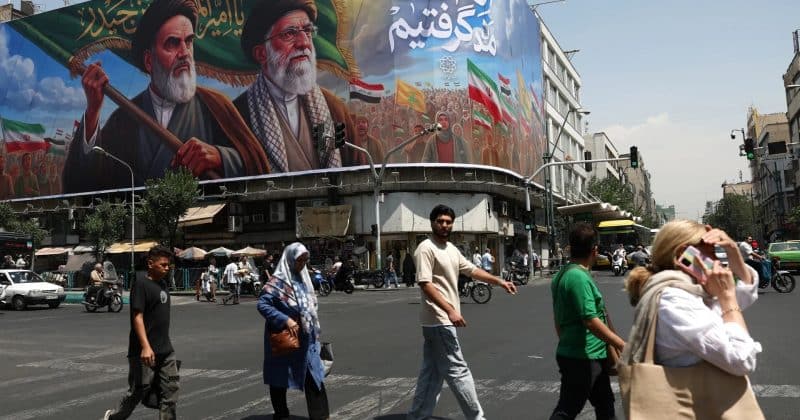
The current security concerns stem from a combination of factors: mine risks in the waterway, regional hostilities, and the broader geopolitical tensions between Western powers and Iran. Oman sits on the southern shore of the strait and has long positioned itself as a neutral mediator in Gulf politics, maintaining diplomatic relationships with Iran while cooperating with Western nations.
The initiative also comes at a moment when global supply chains remain fragile. Between disruptions in the Red Sea from Houthi attacks and ongoing complications in other maritime corridors, shippers and insurers have been pricing in elevated risk premiums for months.
What crypto investors should watch
Insurance premiums for tankers transiting the strait are a leading indicator. When war-risk premiums decline, it signals that the market believes the security situation is genuinely improving. If Iran escalates tensions, refuses to cooperate with the Western-led mission, or if the demining operations prove insufficient, oil prices could spike rapidly. Historical precedent suggests that sudden disruptions in the Strait of Hormuz can send crude up by double-digit percentages within days.
Disclosure: This article was edited by Editorial Team. For more information on how we create and review content, see our Editorial Policy.







 English (US) ·