
 1 hour ago
1
1 hour ago
1
Tether’s USDT briefly overtook Ethereum by fully diluted valuation as ETH fell to its lowest price of 2026.
Summary
- USDT briefly passed ETH by FDV as Ethereum fell to its weakest 2026 level.
- Stablecoin demand keeps expanding even as Ether struggles with selling pressure and ecosystem changes this week.
- Ethereum treasuries are buying ETH dips, but USDT’s growth shows stronger defensive market demand.
The move put stablecoin demand in focus during another weak session for the wider crypto market.
Market data showed USDT’s fully diluted valuation near $191.5b, above ETH’s roughly $189.3b. Ethereum later held its #2 spot by market capitalization, while Tether remained third by circulating market value. The brief flip still showed how close the two assets have become during the latest downturn.
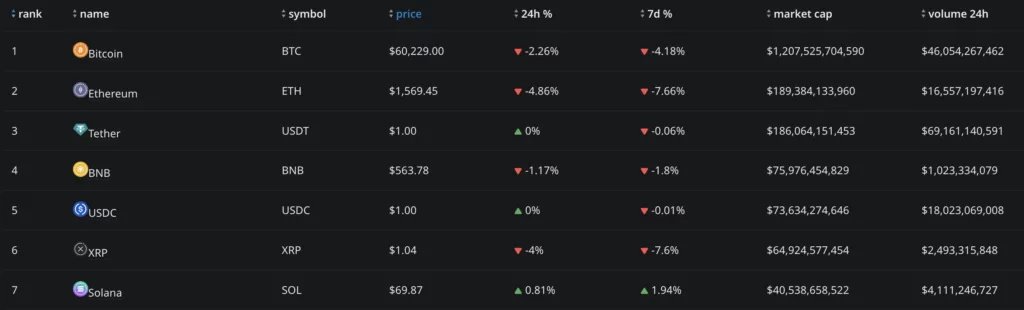 Tether briefly overtook Ethereum, source: crypto.news
The gap closed as ETH fell more than 5% over 24 hours. Ethereum traded near support levels last seen in October 2023 and April 2025. USDT stayed close to $1, as expected for a dollar-pegged stablecoin.
Stablecoin demand keeps growing
The move also fits a larger market trend. Stablecoins have continued to grow even as major crypto assets have fallen. In a recent mid-year market update, 21Shares said, “Stablecoins retracted 30%+ in the last bear market. This time they’re hitting new all-time highs.”
Stablecoins retracted 30%+ in the last bear market. This time they're hitting new all-time highs. To us, that is the strongest evidence yet that stablecoins are one of crypto’s defining use cases – demand that no longer depends on the cycle.
Read more in our State of Crypto… pic.twitter.com/ylYHE9Fbsz
That contrast matters because stablecoins often serve as trading collateral, payment rails and dollar liquidity inside crypto markets. Strong stablecoin supply during a bear market suggests users are not leaving crypto rails completely. Instead, many are moving into dollar tokens while waiting for better conditions.
Tether has also expanded its use cases beyond exchange trading. As previously reported, Tether-backed Oobit brought USDT payments to Brazil’s Pix network, giving users another way to hold dollar tokens and spend through local payment rails.
Ethereum faces market and internal pressure
Ether’s weakness comes as the Ethereum ecosystem faces several changes. The token has struggled near long-term support, while investors watch ETF flows, treasury activity and network funding debates.
As crypto.news reported, the Ethereum Foundation cut roughly 20% of its workforce as part of a wider restructuring. The move removed 54 roles and added new questions about Ethereum’s development structure during a period of weak ETH performance.
The ecosystem also added a new research group. In a previous article, crypto.news discussed Ethlabs, a nonprofit backed by Joe Lubin, BitMine and SharpLink. The group includes former Ethereum Foundation researchers and will work on settlement speed, network capacity, native asset issuance and cross-chain standards.
Treasury buyers return to Ethereum
Some corporate Ethereum treasury firms are still buying the dip. As reported today, SharpLink bought 5,000 ETH after an eight-month pause as Ether traded near yearly lows. The company now holds 876,285 ETH, including staking rewards.
BitMine has taken a much larger position. As crypto.news reported, Tom Lee’s BitMine staked 86% of its ETH holdings, lifting staked ETH to about 4.88m tokens. That gives BitMine one of the largest public ETH treasury positions in the market.
These purchases show that some institutional players still view ETH as a long-term treasury asset. But the USDT flip by FDV shows a different side of the market. Traders are still choosing stable dollar liquidity while ETH tries to defend key support.













 English (US) ·