
 1 hour ago
1
1 hour ago
1
Bitcoin’s recent decline has been driven mainly by nearly $3.8 billion in spot ETF outflows rather than Strategy’s sale of 32 BTC, according to analysts at Citigroup.
Summary
- Citigroup said Bitcoin’s recent drop was driven more by ETF outflows than Strategy’s 32 BTC sale.
- U.S. spot Bitcoin ETFs recorded nearly $4 billion in net outflows between May 15 and June 2.
- Citi sees the CLARITY Act as a potential catalyst and gives it a roughly 50% chance of passing.
In a recent note, Citigroup analysts said investors may be placing too much emphasis on Strategy’s latest Bitcoin transaction while overlooking the sustained withdrawals from U.S. spot Bitcoin exchange-traded funds. The bank argued that ETF flows remain one of the strongest indicators of demand for the cryptocurrency and continue to have a major influence on price movements.
Strategy disclosed in its latest filing that it sold 32 BTC worth roughly $2.5 million between May 26 and May 31. The transaction marked the company’s first Bitcoin sale in four years and only the second in its history, prompting speculation across the crypto market because the firm has long promoted a strategy centered on accumulating and holding Bitcoin.
Analysts at Citigroup, however, said the sale does not materially change Bitcoin’s underlying outlook.
“An announcement of small digital asset treasury selling has had an outsized effect on BTC in our view but does not alter the fundamental backdrop.”
BTC ETF withdrawals remain the largest source of pressure
Looking beyond the Strategy transaction, Citigroup pointed to the persistent outflow trend from spot Bitcoin ETFs as the main factor weighing on prices.
According to the bank’s analysis, ETF flows account for roughly 45% of weekly fluctuations in Bitcoin returns, making them one of the most important gauges of investor sentiment.
Recent data from SoSoValue shows that U.S. spot Bitcoin ETFs recorded nearly $4 billion in net outflows between May 15 and June 2. Among the largest withdrawal days during that period were May 27, when investors pulled $733.4 million, June 2 with $519.1 million in net redemptions, and June 1 with another $483.7 million leaving the funds.
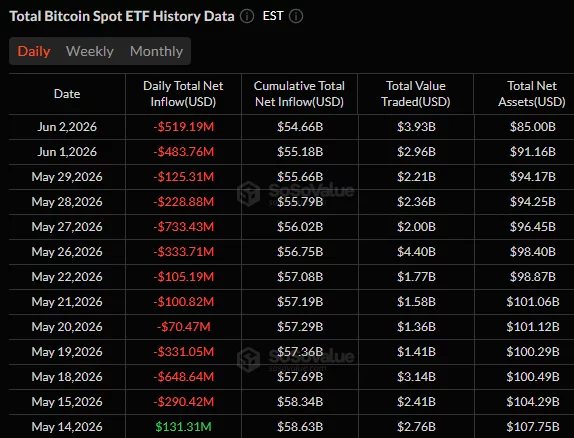 Spot BTC ETFs recorded nearly $4B in net outflows from May 15 to June 2 | Source: SoSoValue
As those withdrawals accelerated, Bitcoin (BTC) fell below the $67,000 level, with institutional demand weakening after months of strong ETF accumulation.
Strategy’s debt repurchase plans provide context for the sale
Additional disclosures from Strategy suggest the Bitcoin sale occurred while the company was focused on managing its debt obligations rather than changing its long-term stance on the asset.
Earlier filings showed that Strategy intends to repurchase nearly $1.5 billion in face value of its 0% convertible senior notes due in 2029. The company expects the transaction to cost about $1.38 billion in cash.
During the same period, Strategy paused Bitcoin purchases and redirected resources toward the debt repurchase effort. Executive Chairman Michael Saylor said the company’s “BitVac is charging,” referring to preparations for future capital deployment.
Company filings also stated that the repurchase could be financed through existing cash reserves, proceeds from at-the-market stock sales, and potentially Bitcoin sales. Those disclosures offered investors a clearer picture of how the company could use its Bitcoin holdings to help meet debt and preferred equity obligations if needed.
Meanwhile, Citigroup said future regulatory developments could improve sentiment. The bank is monitoring the progress of the CLARITY Act, which recently advanced onto the U.S. Senate’s legislative calendar.
Although Citigroup believes the odds of the bill passing this year have declined, analysts still estimate roughly a 50% chance of approval and view the legislation as a possible catalyst for renewed interest in digital assets. Until then, the bank expects sentiment to remain subdued unless investors receive meaningful regulatory support or other macroeconomic catalysts.














 English (US) ·