
 1 month ago
24
1 month ago
24
The US Chamber of Commerce dropped a report this week that reads less like policy analysis and more like a warning flare. China’s industrial strategy, the group says, puts roughly $650 billion in G-7 manufacturing output at risk by 2030. That’s not a typo, and it’s not a projection pulled from thin air. It represents about 12% of manufacturing exports across the world’s most advanced economies.
The report, titled “China’s Next Generation Industrial Policy,” frames the threat as an evolution of the 2015 Made in China 2025 initiative. Beijing didn’t abandon that playbook. It refined it, expanded it, and supercharged it with state subsidies that have now pushed China’s manufacturing trade surplus to $2 trillion as of 2025, roughly double what it was in 2019.
The sectors in the crosshairs
The damage isn’t evenly distributed. Chemicals, machinery, and automotive manufacturing are identified as the most vulnerable sectors, with China steadily capturing market share through a combination of overcapacity and aggressive pricing. The EU alone faces an estimated $224 billion in manufacturing output at risk from Chinese market share gains.
Germany, Europe’s industrial engine, is particularly exposed. The report flags an estimated 120,000 German manufacturing jobs that could be lost by 2025 as Chinese competition intensifies.
Here’s the thing: this isn’t just about cars and chemicals. The report identifies AI and semiconductors as priority target areas for Beijing’s industrial ambitions. China aims to deploy 1,000 industrial AI agents by 2025, a figure that signals the country’s intent to dominate not just traditional manufacturing but the high-tech supply chains that underpin the modern economy.
The US Chamber has taken to calling this dynamic “China Shock 2.0,” a reference to the original China Shock that reshaped global trade after Beijing joined the WTO in 2001.
Supply chains, overcapacity, and the crypto connection
On April 20, 2026, China itself acknowledged part of the problem. Beijing issued warnings about overcapacity in solar production, urging efforts to address excesses amid record exports.
The overcapacity issue extends well beyond solar panels. Battery production, a critical input for electric vehicles and energy storage, faces similar dynamics. When Chinese factories produce far more than domestic demand can absorb, the surplus floods global markets at prices that competitors in G-7 nations struggle to match.
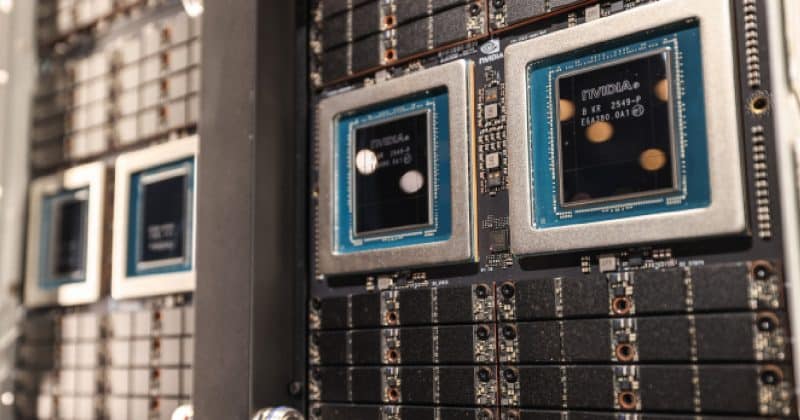
For the crypto industry, semiconductor supply chains sit at the heart of this geopolitical chess match, and those same chips power everything from AI data centers to Bitcoin mining rigs. Any disruption, whether from trade restrictions, supply chain rerouting, or escalating costs due to decoupling, flows directly into the cost structure of blockchain infrastructure.
The data supports the concern about growing dependency. Chinese value-added content in ASEAN final demand rose 60% between 2021 and 2024. In English: even when products are assembled in Vietnam or Thailand, a growing share of the actual value comes from Chinese inputs.
What this means for investors
The US Chamber’s report explicitly calls for coordinated G-7 responses to combat the risk of de-industrialization. For investors, this creates a two-sided dynamic.
On one side, escalating trade tensions and supply chain restructuring tend to increase costs across technology sectors. Mining operations that depend on affordable, readily available semiconductor hardware could see margins compressed. Companies building blockchain infrastructure may face longer lead times and higher prices for critical components as supply chains are rerouted away from Chinese manufacturing hubs.
On the other side, the same pressures that threaten centralized supply chains could accelerate demand for decentralized alternatives. When single points of failure in global manufacturing become a recognized national security concern, the case for distributed systems, whether in computing, finance, or supply chain management, gets stronger.
Disclosure: This article was edited by Editorial Team. For more information on how we create and review content, see our Editorial Policy.













 English (US) ·