
 1 month ago
32
1 month ago
32
China just pulled the trigger on what amounts to a precision strike in the ongoing trade war. The country’s Ministry of Commerce added MP Materials Corp. and USA Rare Earth Inc. to its export control list on June 22, effectively kneecapping two companies the US government has been grooming as alternatives to Chinese mineral dominance.
These aren’t random companies. They’re the two firms Washington has poured hundreds of millions of dollars into specifically to reduce American dependence on Chinese rare earths. Beijing didn’t just restrict exports. It went after the exact companies designed to replace it.
What the restrictions actually mean
Rare earths are the 17 metallic elements that make modern technology possible. They go into everything from fighter jet guidance systems to EV motors to the magnets inside your phone.
China controls roughly 60% of global rare earth mining. That number alone understates the leverage, though, because China also dominates nearly all refining capacity. You can dig the stuff out of the ground in Texas or California, but if you need it processed into something usable, the road still runs through Beijing.
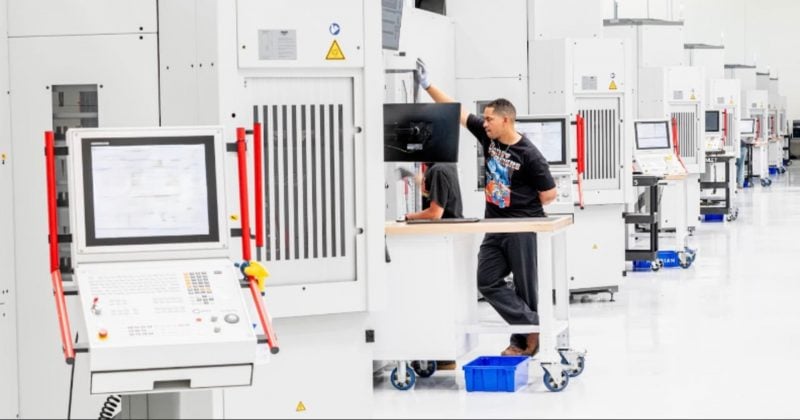
MP Materials operates the only active rare earth mine in the US. USA Rare Earth has been developing processing capabilities with direct federal backing. Both companies rely, to varying degrees, on Chinese-origin materials and processing technology to bridge gaps in their own supply chains. By placing them on the export control list, China is essentially saying: you want to compete with us, fine, but you won’t do it with our help.
The escalation timeline
This didn’t come out of nowhere. The rare earth trade war has been escalating in stages since early 2025, when reciprocal tariffs kicked off a broader decoupling between the world’s two largest economies.
On April 4, 2025, China imposed export licensing requirements on seven heavy rare earth elements. That was the opening salvo, a signal that Beijing was willing to weaponize its mineral dominance.
By October 9, 2025, the scope expanded to cover additional elements and, critically, processing equipment. That second part matters because it targeted not just the raw materials but the ability to build alternative supply chains.
A temporary trade truce in November 2025 saw some restrictions eased. But supply disruptions continued well into 2026. US imports of key materials like yttrium remain below pre-2025 levels, suggesting the damage has been structural rather than temporary.
Why this matters beyond mining stocks
Rare earths are critical inputs for EVs, semiconductors, defense systems, and advanced manufacturing. Any disruption to supply chains for these materials creates cost pressures across multiple sectors.
For the defense industry, the implications are particularly acute. Rare earth magnets are essential components in precision-guided munitions, radar systems, and satellite communications. The Pentagon has been aware of this vulnerability for years, which is precisely why it backed companies like MP Materials. Having China target those same companies by name is, at minimum, an uncomfortable development for national security planners.
The EV sector faces its own challenges. Permanent magnets used in electric motors require neodymium and other rare earths. As global demand for electric vehicles continues to climb, supply constraints could translate into higher vehicle costs or production delays for manufacturers who can’t secure alternative sources.
Disclosure: This article was edited by Editorial Team. For more information on how we create and review content, see our Editorial Policy.














 English (US) ·