
 1 hour ago
1
1 hour ago
1
A 17-year-old British researcher just made Russia’s sanctions list. Alexander Browder, founder of the Global Cryptocurrency Laundering Database, was sanctioned by Moscow on June 3-4 alongside several other UK nationals, including Washington Post journalist Catherine Belton. His offense: publishing a report that laid out, in uncomfortable detail, how Russia has allegedly weaponized digital assets to dodge Western financial restrictions.
Browder’s response was, to put it mildly, unbothered.
“This is a badge of honour. I have exposed their Achilles’ heel.”
The teenager may be the youngest individual ever targeted by Russia’s sanctions regime.
What the report actually found
Browder’s report, published on March 3, 2026, through the Henry Jackson Society, analyzed 164 separate crypto laundering cases. The total volume of illicit funds traced across those cases: approximately $350 billion, spanning roughly two decades of activity. Russian actors, according to the research, were disproportionately represented in that figure.
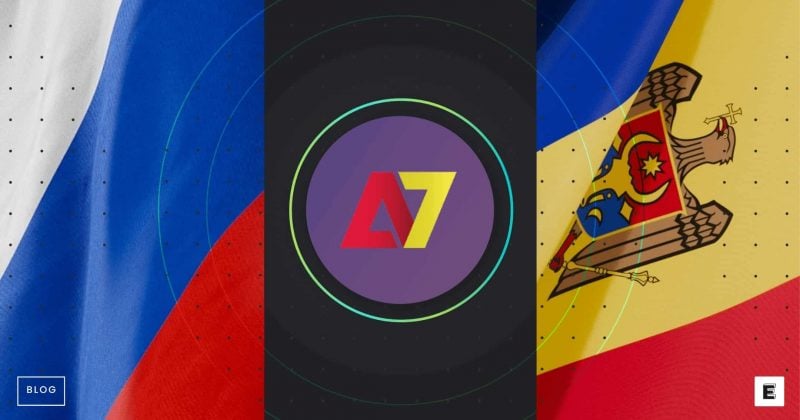
The centerpiece of the findings was a ruble-pegged stablecoin called A7A5, launched in January 2025. According to Browder’s research, A7A5 processed over $100 billion in transactions within its first year of operation.
The report also connected the dots between A7A5, an entity called A7 LLC, and the Grinex exchange. Both A7 LLC and Grinex have already faced sanctions from the UK and US for their alleged roles in facilitating sanctions evasion. Promsvyazbank, a Russian bank that has long been on Western sanctions lists, was also implicated in the broader network described by the research.
Browder subsequently presented evidence to the UK Parliament regarding Russian sanctions evasion via stablecoins, elevating the findings from think-tank territory into the realm of active policy discussions.
Russia, for its part, has dismissed the report as containing “defamatory speculations and false information.”
The family business of annoying the Kremlin
If the Browder surname rings a bell, it should. Alexander’s father is Sir Bill Browder, the financier-turned-activist who has spent over a decade as one of Vladimir Putin’s most prominent Western critics. The elder Browder was the driving force behind the Magnitsky Act, landmark US legislation that enabled sanctions against Russian officials involved in human rights abuses. He has been the target of multiple Russian arrest warrants and Interpol red notices, all of which have been rejected by international authorities.
What this means for crypto investors
Stablecoins are the specific pressure point. The A7A5 case illustrates exactly the scenario that Western policymakers have been warning about: a state-sponsored stablecoin operating outside regulated infrastructure, moving enormous volumes with minimal oversight. If the $100 billion transaction figure holds up under scrutiny, it represents a scale of sanctions evasion that dwarfs previous crypto-related enforcement actions.
Exchanges that touch ruble-denominated stablecoins or interact with entities connected to the Grinex network face heightened compliance risk. The fact that both A7 LLC and Grinex have already been sanctioned means that any exchange failing to screen for these counterparties is potentially exposing itself to secondary sanctions liability.
Disclosure: This article was edited by Editorial Team. For more information on how we create and review content, see our Editorial Policy.













 English (US) ·