
 1 hour ago
2
1 hour ago
2
Bahrain’s Defense Force intercepted and destroyed multiple Iranian missiles and drones targeting the country on July 14, marking the third significant Iranian military strike in the Gulf region this year. The attack, claimed by Iran’s Islamic Revolutionary Guard Corps, targeted US military facilities in Bahrain, home to the US Navy’s 5th Fleet headquarters.
Jordan’s armed forces reported intercepting four Iranian missiles entering their airspace the same day. No casualties or damage were reported in either country following the defensive operations.
The Gulf’s growing volatility problem
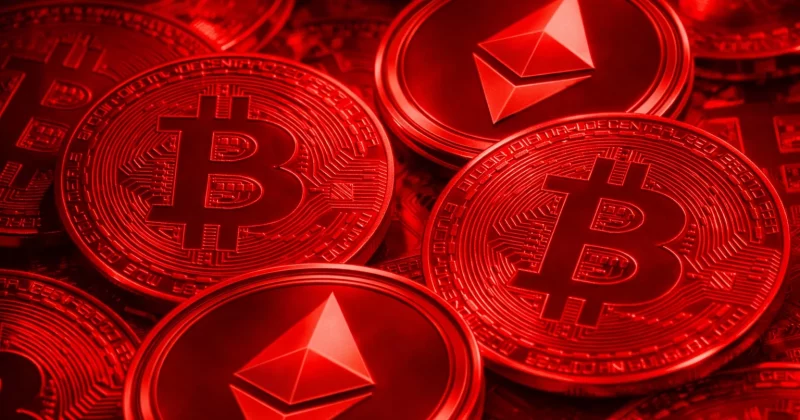
This incident fits into a pattern that’s become uncomfortably familiar in 2026. Iranian missile strikes hit the region in both March and June, each time sending shockwaves through financial markets. The June escalation alone triggered over $700 million in crypto liquidations, with Bitcoin experiencing a significant sell-off as traders scrambled for the exits.
The Strait of Hormuz, which sits at the center of these tensions, handles roughly a fifth of global oil transit.
The pattern from earlier 2026 incidents is instructive. Initial shock drives rapid deleveraging. Prices drop. Liquidation cascades amplify the move. Then, after the dust settles, a gradual recovery typically follows as markets reassess the actual economic impact versus the headline fear.
Bahrain’s awkward dual identity
Bahrain is simultaneously one of the most forward-thinking crypto jurisdictions in the Middle East and a frontline participant in an escalating military conflict. The Central Bank of Bahrain established its Crypto-Asset Module back in 2019, making it one of the earliest Gulf states to create a regulatory framework for digital assets. The country launched a stablecoin regulatory module in July 2025, further cementing its position as a regional fintech hub. Its FinTech sandbox has attracted companies looking for a progressive regulatory environment in the Middle East.
What crypto investors should actually watch
Watch the funding rates on perpetual futures. During the June escalation, negative funding rates preceded the liquidation cascade by hours. They’re one of the few leading indicators that consistently signal when leveraged positioning has become dangerously one-sided ahead of a geopolitical shock.
The $700 million liquidation figure from June should serve as a reference point. If this latest incident triggers a similar or larger cascade, it would confirm that the market hasn’t adequately priced in the risk of continued Gulf escalation. If liquidations stay well below that threshold, it might suggest that traders have finally learned to keep their leverage in check when operating in a region where geopolitical risk events are becoming routine rather than exceptional.
Disclosure: This article was edited by Editorial Team. For more information on how we create and review content, see our Editorial Policy.












 English (US) ·